New gen Hyundai Venue gets a redesigned exterior and interior along with the inclusion of new features and technologies
Hyundai Motor India is all set to introduce the new generation Venue on November 4, 2025. Ahead of the market debut tomorrow, the company has already released pictures of the standard and N Line variants. The compact SUV packs a comprehensive overhaul inside and out with revised styling and a more upmarket features list but no major mechanical changes.
The new Venue N Line adopts a more prominent design language that separates it from the outgoing version. The redesigned bumpers now feature red accents while the dark chrome grille wears the N Line badge in the N Line variant. The updated 17-inch diamond cut alloys with red brake callipers, roof spoiler and twin tip exhausts complete the SUV’s look.
The new LED lighting systems and light bars are common for both versions. In the N Line trim, the black interior with red contrast stitching sets a sporty tone, complemented by N-branded leather seats and metallic pedals. The steering wheel now features a new design while the gear knob and ambient lighting add to the premium feel.
A 12.3-inch infotainment display powered by NVIDIA hardware dominates the dashboard, supported by a Bose eight-speaker sound system and dual digital screens. Under the bonnet, Hyundai continues with the proven 1.0-litre turbocharged GDi petrol engine producing 120 PS and 172 Nm. Gearbox choices include a 6-speed manual and a 7-speed dual-clutch automatic, the latter now featuring paddle shifters for a more spirited drive.
Hyundai has reworked the exhaust system and suspension setup to improve response and engagement. On the safety front, the Venue N Line now packs Level 2 ADAS with 21 active assist systems, alongside 70 advanced and 41 standard safety features such as TPMS, electronic parking brake and a reinforced body shell.
Moving to the standard range, the new-gen Venue lineup retains the familiar trio of powertrains. The 1.2-litre Kappa petrol continues as the entry point. The 1.5-litre diesel engine has now been upgraded with a 6-speed automatic gearbox. Hyundai says each motor has been tuned for smoother throttle response and stronger mid-range performance.
The compact SUV also gains selectable drive and traction modes, offering flexibility between Eco, Normal and Sport settings as well as specific modes for Sand, Mud and Snow. Bookings for the new Venue have already opened at a token amount of Rs. 25,000 both online and across Hyundai dealerships.
Hyundai is positioning the new Venue as a more complete and feature-rich package aimed squarely at rivals like the Tata Nexon, Kia Sonet, Maruti Suzuki Brezza, Mahindra XUV 3XO Skoda Kylaq, etc and it will be available in multiple single- and dual-tone paint schemes.
With the next-gen City and 0 Alpha being the priority until 2027, the new small SUV may arrive in 2028 at the earliest
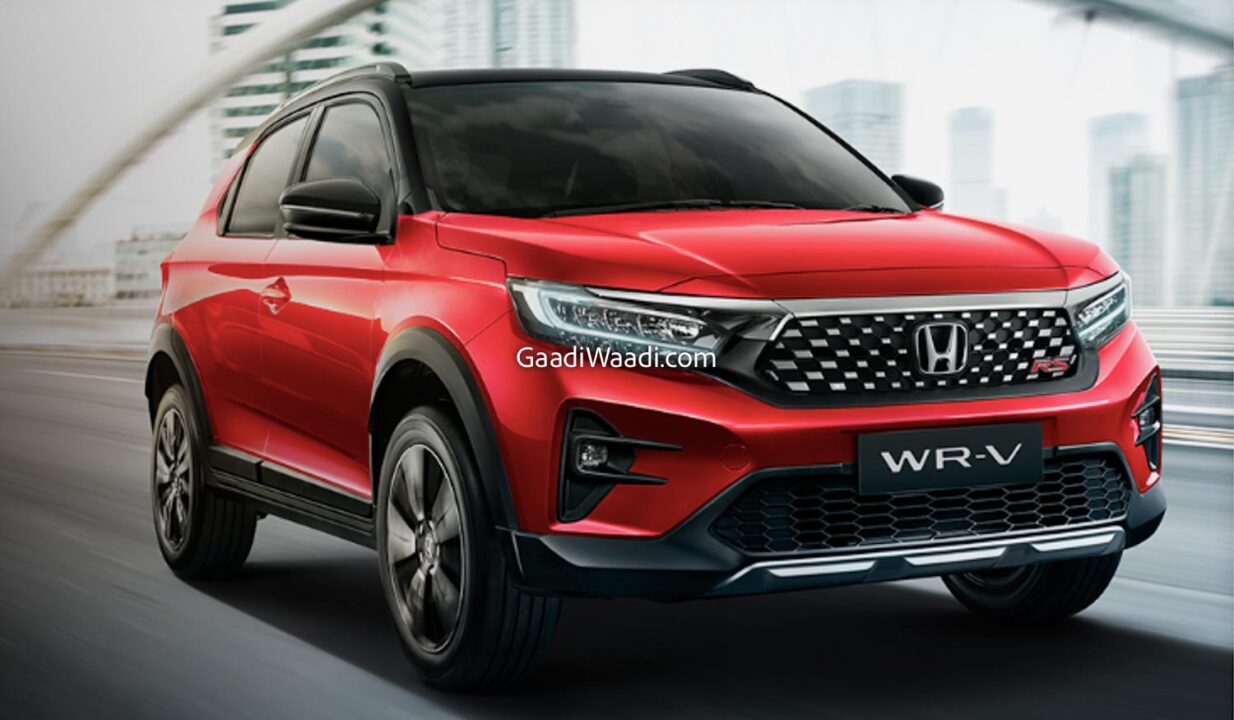
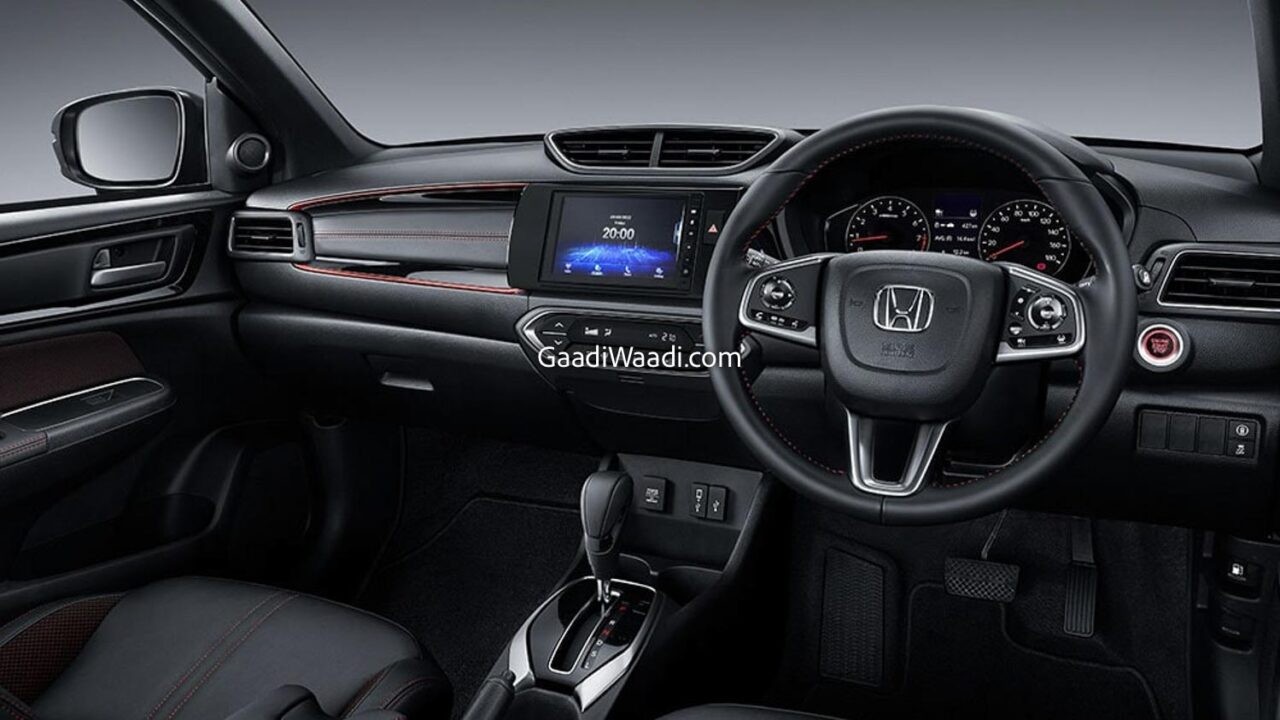
The first-generation Honda WR-V that bowed out in early 2023 could be earmarked for a return in a whole new avatar. The Japanese automaker is considering a new sub-4 metre SUV for our market.
Strengthening its focus on India, Honda has lined up ten product launches by the end of the decade. These launches would include new models, refreshes and lifecycle makeovers for existing products, and perhaps even revived nameplates.
According to recent media reports in India, Honda may rethink its absence in the crucial sub-4 metre SUV category. Like in the case of the larger HR-V, which the company cancelled at the last moment in 2019, the company is facing a challenge with the costing of the potential new sub-4 metre SUV. That said, this time it appears to have greater incentives to come up with a solution.
With sub-4 metre cars attracting up to 13% lower GST following the revisions in September, automakers with limited or no presence in the segment are revising their product strategy. Honda, selling only the Amaze in this segment, is one of these brands interested in leveraging the new GST structure to grow its business in India.
The potential Honda WR-V successor would face stiff competition from long-standing and popular rivals like the Maruti Brezza, Hyundai Venue, Tata Nexon, and Kia Sonet. To make a strong comeback in this segment, Honda would need to focus much more strongly on parameters like performance, comfort, connectivity, and safety than it did with the first-generation WR-V.
The sub-4 metre segment has matured significantly in recent years. Customers are increasingly demanding more powerful engines, more sophisticated automatic transmissions, more advanced infotainment systems, stronger body structures, new passive safety features, and a myriad of advanced driver assistance systems.
Internationally, there are rumours of Honda planning to launch the next-gen Brio with an SUV body style and a hybrid system. We think the company could introduce the same model in India as the successor to the first-generation WR-V. Here, too, it may offer a hybrid powertrain as an option, marketing high fuel economy as one of the model’s key selling points. We don’t expect it launch it anytime before 2028, though.
Besides the heavy contribution of the SUVs, the demand for diesel-powered vehicles also witnessed a rise especially in the rural circuits, stated Hyundai
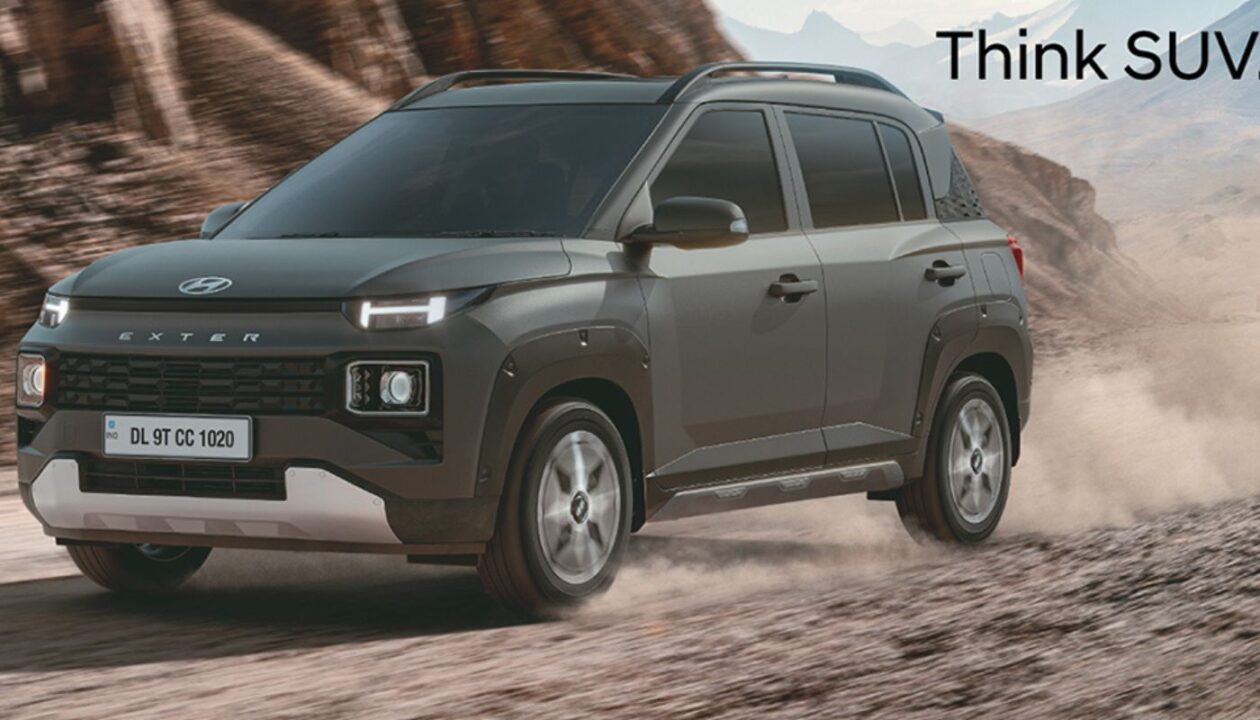
Hyundai India sales in the domestic market were primarily driven by SUVs as they accounted for 71 percent of the overall sales in the second quarter (Jul-Sep) of this financial year (FY26). The company stated that its SUV portfolio consisting of models such as Exter, Creta, and Venue was in massive demand in several rural circuits. It even went on record to state that the diesel fuel trim was favoured by most of the buyers. Hyundai sold a total of 99,220 SUVs during the Q2 FY26 with a YoY growth of 71 percent from the earlier 69 percent.
Diesel-powered vehicles accounted for 23 percent of the overall sales in Q2 of FY26. The rural markets contributed to a record 24 percent in total sales achieved by the brand during the last quarter. The share of the SUVs in the rural market sales stood at 72 percent, which was marginally higher than that in the urban markets. “Rural contribution reached a record 23.6–24 per cent this (Q2) quarter, with rural SUV share at 72 per cent, slightly higher than urban,” Garg said.
“More than 60 per cent of Hyundai’s buyers are under 40 years old, reflecting strong confidence in the brand,” said Tarun Garg, Whole-time Director & Chief Operating Officer during the Q2 post-earnings call. Hyundai India retailed a total of 139,521 units in the domestic market during the last quarter with a YoY de-growth of 6.8 percent. However, the export volumes increased during this quarter with YoY growth of 21.5 percent.
“Wholesales and retails were affected; customers postponed purchases until clarity emerged,” said Garg, adding that the quarter was a “transformative step” for the industry. Hyundai said in an official statement that rural buyers are highly cost-conscious and hence, they delayed purchases in order to get clarity on the new GST rates. In particular, Hyundai Venue sales were affected the most due to the arrival of the new model on Nov 4.
Hyundai exported 51,400 units during the last quarter from India with key markets being the Middle East and Mexico. While the Aura and Venue contributed the most to the Middle East exports, the Grand i10 Nios hatchback was the most shipped model from India to South Africa. The Alcazar was also exported in decent numbers. “Strong global demand and product competitiveness will help us exceed our FY26 export guidance,” Garg noted.
Hyundai posted a strong EBITDA of Rs 24,289 million (Earnings Before Interest, Taxes, Depreciation, and Amortization) in the second quarter of FY26 due to higher exports, quality of sales and cost optimization. “HMIL did not join the discount war even during the GST transition, which helped sustain profitability,” Garg added.
Hyundai has held the position of India’s second largest automotive brand for the longest time in the passenger vehicle segment in terms of sales volumes. However, in the last few months, it has been dethroned from this position by home-grown auto brands namely Tata Motors and Mahindra & Mahindra due to massive surge in the sales of SUV models.
Bajaj has commenced the testing of the next-gen Chetak e-scooter, and it is expected to go on sale sometime next year in India
The electric scooter market is growing at a rapid pace in India, and we have witnessed the launch of multiple new products throughout this year. While some legacy brands have already entered the segment, a few Japanese players like Yamaha and Suzuki will soon launch their first electric scooters in the domestic market. In this article, we will look at the upcoming electric scooters from top brands in India.
1. New-Gen Bajaj Chetak
Pic Source: Rushlane
Bajaj Chetak is currently one of the best-selling electric scooters in the Indian market. Recently, a new version of the e-scooter was spotted testing for the first time, hinting at the next-gen model of the Chetak EV. Talking about the changes, the spy shots gave away the new tail light, new rear tyre hugger, a flatter seat and a fresh switchgear console. Expected to launch sometime next year, the Chetak EV will likely retain the existing 3.5 kWh battery pack, with a claimed range of around 150 kilometres on a single charge.<
2. Suzuki e-Access
Suzuki’s first electric scooter, the e-Access, will likely be launched soon in the Indian market. It was showcased at the 2025 Auto Expo earlier this year, and production has already commenced at the brand’s Gurgaon-based facility. As per the available details, the e-Access will draw power from a 3.07 kWh battery pack, with a claimed range of 95 kilometres on a single charge. The battery will be mated to a 4.1 kW electric motor, producing 15 Nm of torque.
3. Yamaha RY01
Pic Source: Autocar
Yamaha is working on its first electric scooter for the Indian market, which will be based on the River Indie. Expected to launch in 2026, the e-scooter was spotted testing in May this year. Internally codenamed RY01, the Yamaha electric scooter will sport a different design, however, the hardware setup will remain more or less the same. In terms of powertrain, the Japanese two-wheeler manufacturer will likely use the familiar 4 kWh NMC battery pack with a mid-mounted electric motor, claiming a range of up to 100 kilometres on a single charge.
4. Ather EL
Ather Energy showcased a new platform for its upcoming electric scooter range in August. Dubbed the ‘EL’, the next-gen EV architecture will underpin a range of new e-scooters. The EL01 Concept was also showcased by the Indian EV startup, which will be a family-oriented electric scooter. The first scooter from the brand’s EL range will go on sale around the festive season of 2026.
5. Simple Energy New Family-Oriented E-Scooter
The Bengaluru-based electric vehicle manufacturer recently filed a design patent for an all-new electric scooter. The patent images highlight a minimalistic design language of the e-scooter, hinting at a new family-oriented model. This will mark a shift from the brand’s current range of sporty e-scooters. In terms of design, a long flat seat, an LED headlamp, chunky side body panels, and a flat floorboard can be seen. While the technical details are scarce at the moment, the upcoming Simple Energy electric scooter is expected to launch sometime next year.
Honda Super-One compact EV debuts at Japan Mobility Show 2025
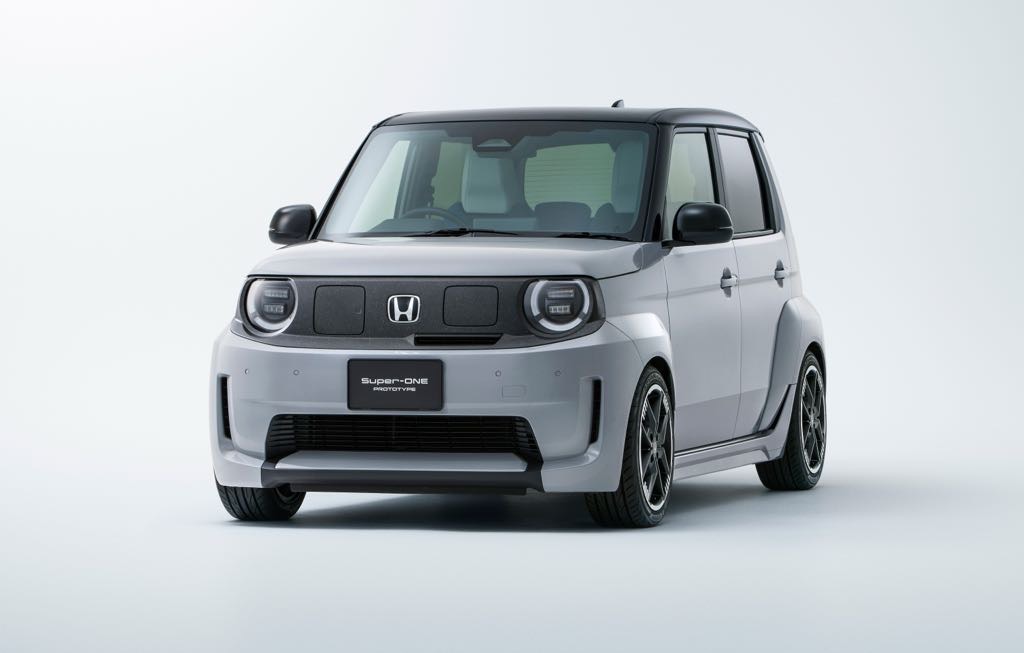
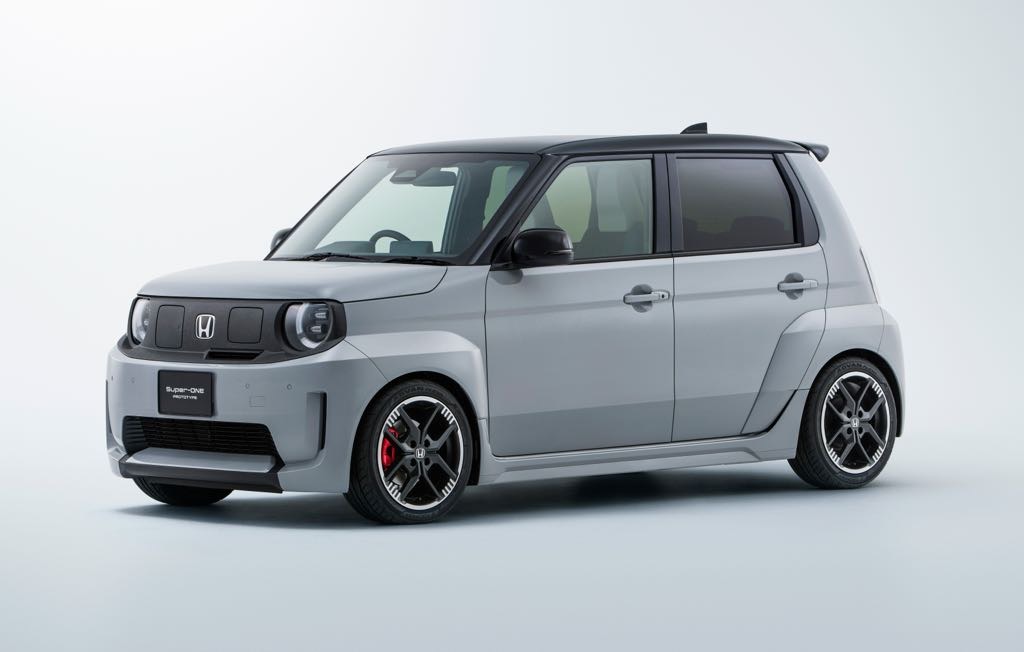
Honda has unveiled the Super-One, a near-production compact electric vehicle, at the Japan Mobility Show 2025. The tall-boy hatchback, aimed at driving enthusiasts, represents Honda’s continued push toward practical yet engaging EVs for urban mobility. The production version is expected to launch soon in Japan and select markets across Asia and Oceania, while the UK version will carry the name Super-N.
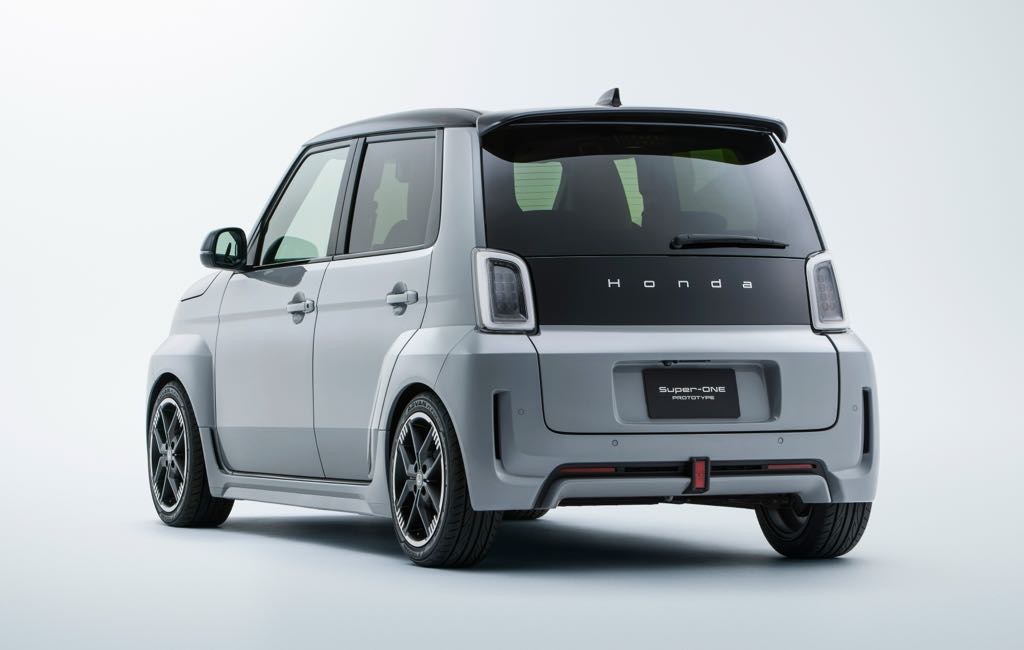
The Super-One’s design blends compact city-friendly dimensions with a sporty, wide stance. Flared fenders, 8-spoke black alloy wheels, and a low profile contribute to its planted appearance. The front end carries a traditional Honda badge and round LED headlights integrated with the charging ports, while the bumpers feature vertical air ducts for improved cooling and aerodynamics. At the rear, rectangular tail-lamps positioned at the base of the window and a subtle roof spoiler complete the EV’s modern yet purposeful look.
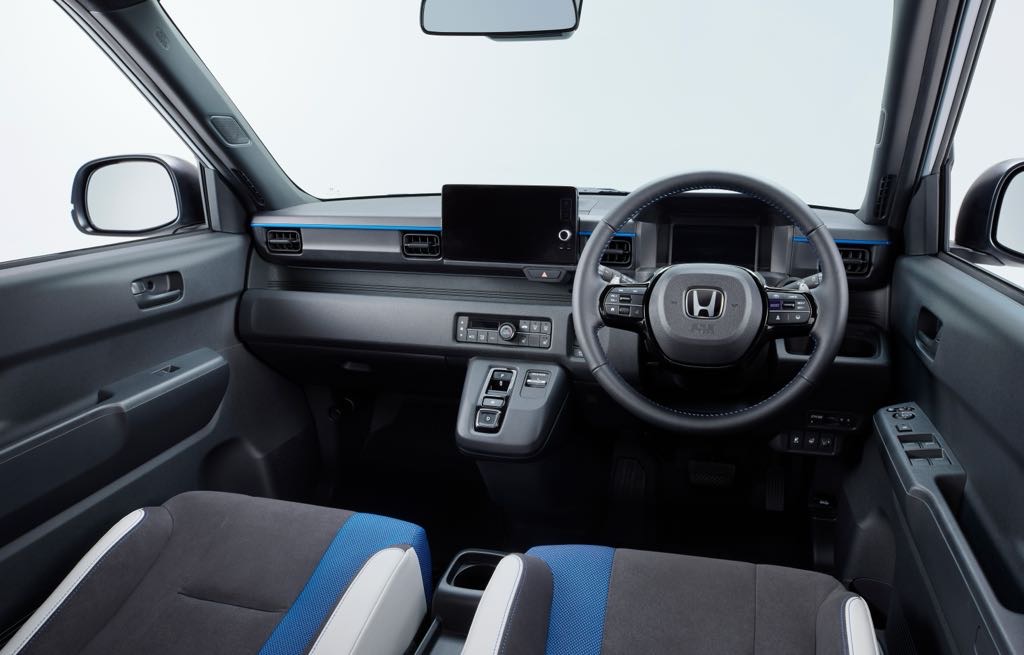
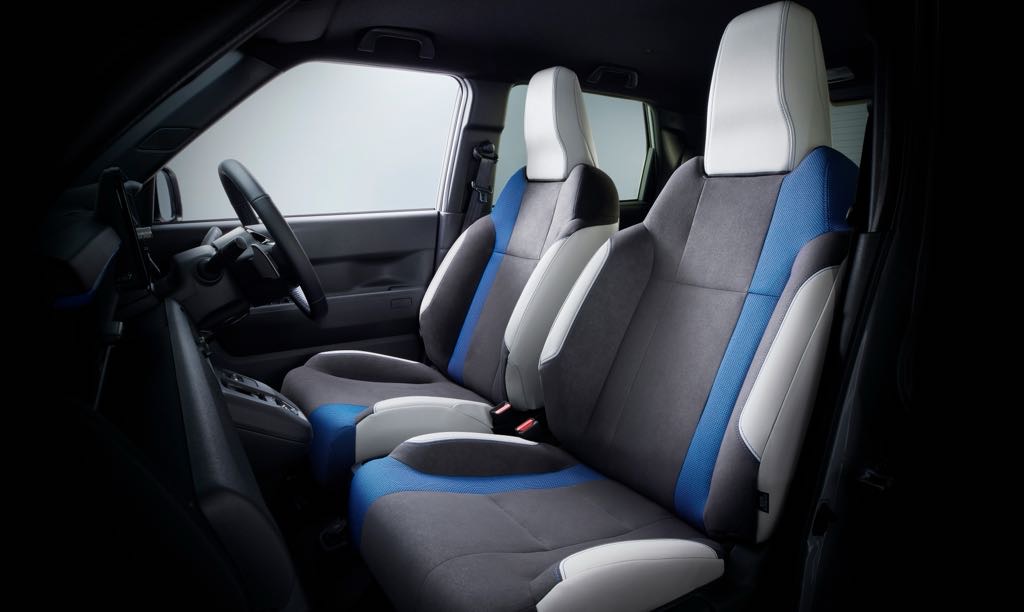
Inside, Honda has given the Super-One a clean, horizontal dashboard layout, emphasising simplicity and driver focus. The cabin includes a digital instrument cluster, a central infotainment touchscreen and a two-spoke steering wheel. Despite its futuristic appeal, the car retains physical buttons and knobs for essential controls such as air conditioning, reflecting Honda’s balance between digital innovation and tactile usability. Blue accents and sporty seat designs add a touch of character to the interior.
The Super-One’s specifications remain largely undisclosed, but the model is known to comply with Japan’s Kei car regulations, meaning it measures under 3.4 meters in length. Honda says the EV will feature a Boost mode that temporarily enhances power output, a simulated 7-speed gearbox for a more engaging driving experience, and virtual engine sounds to appeal to enthusiasts who miss traditional combustion feedback.
Previewed earlier as the Super EV concept at the 2025 Goodwood Festival of Speed, the Honda Super-One is now closer to reality. It signals the brand’s intent to blend compact practicality, electric efficiency and driving enjoyment – attributes long associated with Honda’s DNA.
This article lists the upcoming 10 new SUVs in the Indian market by leading automotive brands over the course of next three years
The Indian auto industry is hugely dominated by SUVs as compared to any other body type such as hatchback and sedan. In the last few years, the SUVs have outnumbered sedans as well as hatchbacks with a market share of more than 50 percent in the domestic sales. Hence, more and more auto brands are planning to launch SUVs in the Indian market. In this piece, we will talk in detail about the upcoming brand new SUVs launching in the next 3 years in India.
1. Toyota Land Cruiser FJ
The ‘baby’ Land Cruiser will hit the Indian roads during the festive season of 2028, which is nearly three years away from now. It has been further learnt that the SUV will be offered with strong hybrid and plug-in-hybrid powertrains while no diesel engine will be available. The Land Cruiser FJ will be positioned between the Urban Cruiser Hyryder and Fortuner while going against the mighty Mahindra Scorpio N in India. The prices could start at Rs 18-20 lakh (ex-showroom).
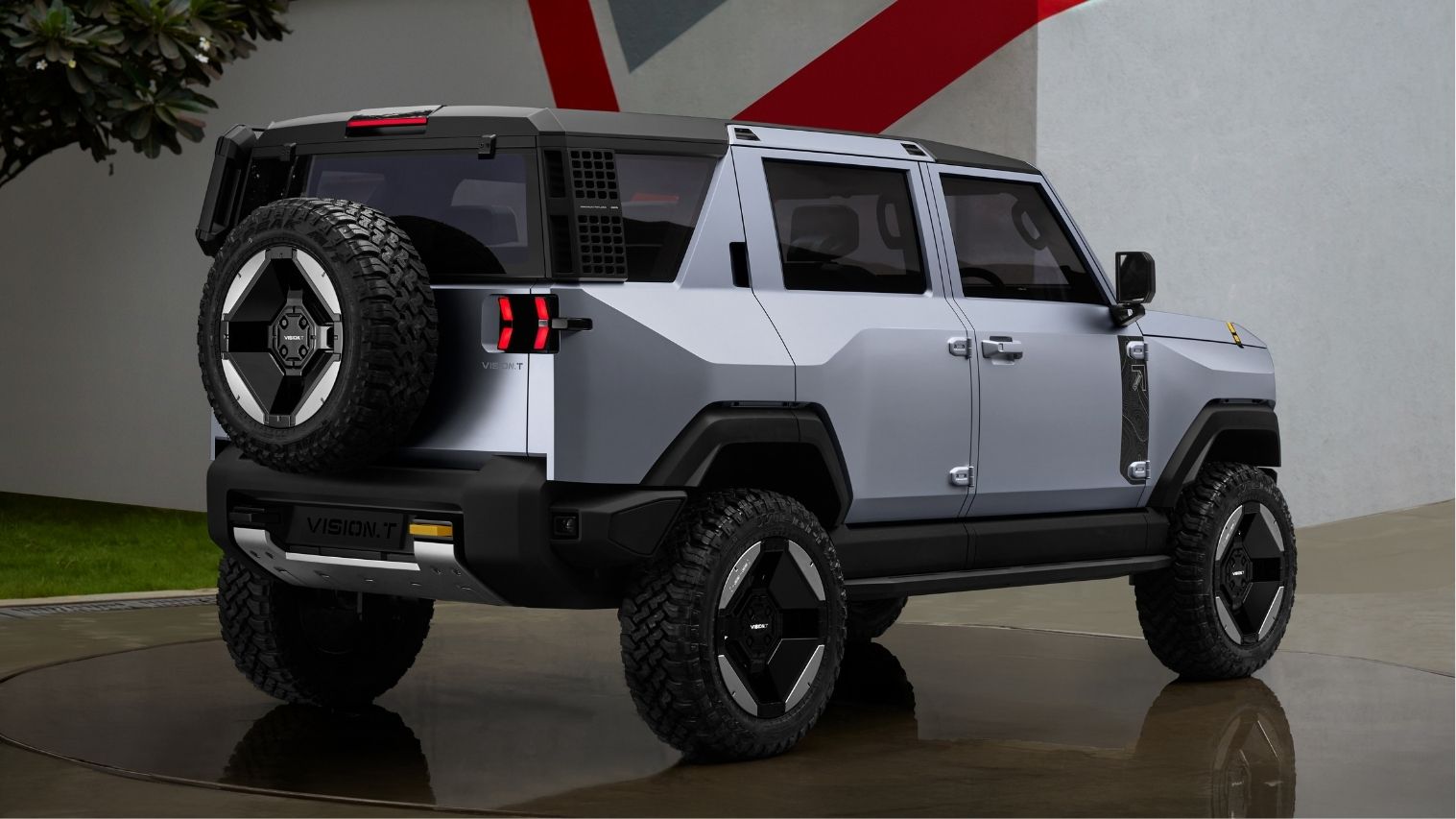
Mahindra unveiled the Thar.e concept on Aug 15, 2023 in South Africa. It further presented a more refined version of the Thar.e in the form of Vision T at this year’s Independence Day in India, which is likely to spawn the all-electric Thar SUV. Several media reports claim that Mahindra Thar electric will be underpinning the NU_IQ platform while taking styling cues from the Thar Roxx. It is likely to come with two battery pack choices and dual-motor configuration with AWD system.
3. Mahindra Vision S
It was one of the four concept models showcased by Mahindra on Aug 15, 2025 in India. The Vision S is claimed to preview a smaller (sub 4-m) version of the brand’s best-seller Scorpio SUV in the domestic market. Recently, the production-ready Mahindra Vision S was spotted during its test runs and the spy images confirmed the inclusion of panoramic sunroof. Underpinning the NU_IQ platform, it could become the second Mahindra model in the compact SUV segment after the XUV 3XO.
Internally codenamed as Ni1i, Hyundai 7-seater hybrid SUV is likely to debut by mid 2027. The three-row SUV will be locally produced at the brand’s Talegaon factory in Maharashtra. Claimed to be longer than Tucson, it could be equipped with the hybridised version of the 1.5L naturally-aspirated petrol engine. With the introduction of this new hybrid model, Hyundai will have two 7-seater SUVs in its portfolio including Alcazar. We expect more information on the new SUV to come out in the coming months.
5. New Honda EV
At the ongoing Japan Mobility Show 2025, Honda 0 Alpha SUV was unveiled for the Indian market. The all-electric SUV will enter production by late 2026 at the company’s Tapukara facility in Rajasthan while being exported to several global markets. It will be squarely aimed at Hyundai Creta EV, MG ZS EV and Maruti e-Vitara in the domestic market. The 0 Alpha concept flaunts upright stance, large windscreens, and thick C-pillar while riding on 19-inch alloy wheels. The technical specs are not available at this moment.
6. Renault Duster
Renault India has confirmed that the new-gen Duster will return to the Indian market on Jan 26, 2026. The French automaker had discontinued the SUV four years back in 2022. Though Renault has been quite tight-lipped on the engine specs of the upcoming Duster, we can confirm that it will be powered by the 1.3L turbocharged HR13 petrol engine which generates top power of 156 bhp. It will be available with both manual and CVT gearbox options. It has been learnt that the base trims could be offered with Kiger’s 1.0L 3-cyl turbo petrol engine, albeit with lower power output.
7. Nissan Tekton
Nissan Tekton
The all-new C-segment SUV from Nissan, christened as Tekton, will be launched by mid 2026 in the Indian market. For the unversed, Tekton stands for architect or craftsman in Greek language. Nissan Tekton styling takes inspiration from the Tekton with connected LED headlight upfront and LED tail-lamp cluster at the rear. Based on the same platform as the upcoming 2026 Renault Duster, it is expected to share the same engines as its Renault counterpart. It will be locally developed at the Chennai facility.
The Sierra SUV will make its highly anticipated comeback on Nov 25 in the Indian market. Unveiled at the 2025 Bharat Mobility Global Expo, it will be positioned above the Curvv to rival the likes of Hyundai Creta, Maruti Grand Vitara and Kia Seltos. We believe the company to first introduce the ICE-powered versions at a starting price of Rs 11 lakh (ex-showroom). Some of the notable features expected onboard are triple-screen setup, Level 2 ADAS and ventilated seats. It is likely to debut the 1.5L turbocharged petrol engine while the diesel variants will borrow the Curvv’s 1.5L engine.
9. Volkswagen Tayron
The Tayron SUV was spotted undisguised on the Indian roads earlier this year in May with a launch expected around the Diwali festive season. However, the German brand didn’t launch the 7-seater SUV last month in India and now it is expected to go on sale in the coming few weeks. To be locally assembled at VW’s Aurangabad facility, it will take on the likes of Skoda Kodiaq, Jeep Meridian, Toyota Fortuner and Citroen C5 Aircross. It is likely to draw power from a 2.0L turbocharged petrol engine, which we have seen on the VW Tiguan R-Line and Skoda Kodiaq.
10. New-Gen Kia Seltos
The new-gen Kia Seltos will debut in India by mid 2026. The SUV has been spotted on several instances during its test runs in the country. It is likely to get a complete overhaul in terms of styling while the cabin is also expected to get advanced, upmarket and premium features. There is a whisper among certain sections of media that the new-gen Kia Seltos will debut hybrid tech for the brand in India, apart from the conventional 1.5L naturally-aspirated petrol, 1.5L turbo petrol and 1.5L diesel engines.
With an overall sales of around 43,000 units in October 2025, Toyota saw a strong growth in the YOY and MOM trends
Toyota Kirloskar Motors (TKM) has announced its sales results for the festive month of October 2025. The Japanese carmaker posted domestic sales of 40,257 units while the export number stood at 2,635 units last month.
The company registered a total sales of 42,892 units (domestic + export) in October 2025, reflecting a commendable 39% YOT growth. (30,845 units in October 2024). Talking about the month-on-month sales, a 38% growth was reported, up from the 31,091 units mark in September 2025.
The festive season demand and reduction in GST rates were the two primary factors leading to this steep sales growth in October 2025. The company introduced the Urban Cruiser Hyryder Aero Edition, featuring an exclusive styling package, along with the 2025 Fortuner Leader Edition as a part of the brand’s product expansion strategy.
These aforementioned special edition models of Hyryder and Fortuner are available for booking and delivery across authorised dealerships. Furthermore, in order to strengthen its presence in the used car market, Toyota inaugurated a new pre-owned car outlet in Chandigarh.
Toyota is also preparing to expand its line-up in the Indian market with the launch of 15 new models by 2030, including updates to the current line-up, new SUVs, an affordable pick-up truck and a few Suzuki-sourced products.
The Land Cruiser FJ was also recently unveiled by the brand at the Japan Mobility Show 2025. The most affordable SUV in the LC line-up is confirmed for the Indian market, and it will be launched by 2028. In addition to this, the Japanese carmaker will expand its existing Bidadi-based manufacturing facility and develop a new production plant in Chhatrapati Sambhaji Nagar (Aurangabad), Maharashtra, with an investment of USD 3 billion.
Speaking on the strong sales growth in October 2025, Mr. Varinder Wadhwa, Vice President, Sales-Service-Used Car Business, said, “Our growth stands as a testament to the seamless synergies across our operations and the unwavering commitment to customer-centricity. The favourable economic environment during the festive season, reinforced by the government’s forward-looking GST reforms, has also boosted market confidence. At TKM, this has resulted in a significant rise in customer enquiries and order intakes, collectively driving our overall performance.”