Skoda Sales Analysis May 2026 – Kylaq, Kushaq, Slavia & Kodiaq

GaadiWaadi -

2026-skoda-kushaq-facelift-launched-india.jpg

Skoda posted total domestic sales of 5,760 units in May 2026, registering a 15 per cent decline compared to 6,740 units sold during the same month last year

Skoda Auto India recorded domestic sales of 5,760 units in May 2026 by registering a 15 per cent decline compared to 6,740 units sold during the same month last year. Its volumes also dropped 16 per cent from 6,886 units posted in the previous month of April. The Czech brand’s notable growth from the Kushaq was offset by weaker contributions from the Kylaq, Slavia and Kodiaq.

The Kylaq remained Skoda’s most sold product despite a decline. The compact SUV posted sales of 3,443 units in May 2026 compared to 4,949 units during the corresponding month last year – resulting in a 30 per cent drop. Its monthly volumes also slipped by 16 per cent from 4,089 units recorded in April. Even with the decline, the Kylaq accounted for nearly 60 per cent of Skoda’s total domestic volume during the month.

The biggest positive bit came from the Kushaq. Sales more than doubled to 1,310 units from 644 units registered in May 2025 with a huge 103 per cent year-on-year increase. The midsize SUV competes against the Hyundai Creta, Kia Seltos, Honda Elevate, Maruti Suzuki Grand Vitara and Victoris, MG Astor and Toyota Hyryder amongst others.

2026-Skoda-Kylaq-Classic-Prestige.jpg

Model

May 2026

May 2025

YoY Growth

Kylaq

3,443

4,949

-30%

Kushaq

1,310

644

103%

Slavia

861

937

-8%

Kodiaq

146

208

-30%

Superb

0

2

0%

Octavia

0

0

0%

Total

5,760

6,740

-15%

The Kushaq is offered with a 1.0-litre TSI petrol engine producing 115 hp and 178 Nm while higher variants use a 1.5-litre TSI petrol engine generating 150 hp and 250 Nm. Transmission choices comprise six-speed manual, six-speed automatic and seven-speed DSG options. The Slavia sedan contributed 861 units in May 2026 against 937 units a year earlier.

The figures resulted in an 8 per cent decline. As opposed to many sedans that have witnessed notable contractions in recent years, the Slavia managed a modest 4 per cent increase over April 2026. Sharing its MQB-A0-IN platform and engine lineup with the Kushaq, the Slavia remains one of the few midsize sedans offering turbo petrol engines across the range.

skoda slavia monte carlo

At the premium end, the Kodiaq registered 146 units compared to 208 units in May 2025 with a 30 per cent decline. However, monthly volumes improved by 26 per cent over April. The flagship SUV is powered by a 2.0-litre turbo petrol engine producing 204 hp and 320 Nm and is coupled with a seven-speed DSG transmission and all-wheel-drive system.

A closer examination of the numbers shows the Kylaq and Kushaq accounted for 4,753 units out of Skoda’s total tally of 5,760 units. The numbers mean more than 82 per cent of the brand’s domestic volume came from its two SUV offerings. The appreciable growth delivered by the Kushaq due to the arrival of the facelift also demonstrates that demand for midsize SUVs remains healthy.

The post Skoda Sales Analysis May 2026 – Kylaq, Kushaq, Slavia & Kodiaq appeared first on Gaadiwaadi.com - Latest Car & Bike News by Surendhar M.


from Gaadiwaadi.com – Latest Car & Bike News https://ift.tt/gHLBwpz

Kia Sales Analysis May 2026 – Seltos, Sonet, Carens, Syros, Carnival

GaadiWaadi -

New Kia Seltos 3

Kia recorded total domestic sales of 27,586 units in May 2026, registering a 24 per cent increase compared to 22,315 units in India

Kia India posted domestic sales of 27,586 units in May 2026 by registering a 24 per cent increase compared to 22,315 units recorded during the same month last year while monthly volumes were also marginally higher than April 2026. The Seltos, Sonet and Carens accounted for majority of the brand’s volume while more premium products contributed a much smaller share.

The Seltos emerged as Kia’s largest selling model for the month. Sales climbed to 10,597 units from 6,082 units a year earlier – resulting in a substantial 74 per cent year-on-year jump. The midsize SUV also retained its position as Kia’s flagship volume generator despite intense competition from the Hyundai Creta, Maruti Suzuki Grand Vitara and Victoris, Toyota Hyryder, etc.

Available with 1.5-litre naturally aspirated petrol, 1.5-litre turbo petrol and 1.5-litre diesel engines, the Seltos benefits from multiple transmission choices including manual, iMT, automatic and dual-clutch automatic options and is sold in an expansive range. The Sonet finished close behind with 9,707 units in the second position.

2026-Kia-Sonet.jpg
2026 Kia Sonet

Model

May 2026

May 2025

YoY Growth

Seltos

10,597

6,082

74%

Sonet

9,707

8,054

21%

Carens

6,208

4,524

37%

Syros

961

3,611

-73%

Carnival

113

44

157%

Total

27,586

22,315

24%

The compact SUV recorded a healthy 21 per cent increase over May 2025 but volumes slipped by 8 per cent compared to April 2026. The Carens lineup reported another appreciable month with sales reaching 6,208 units – up 37 per cent year-on-year. The addition of the Clavis EB has further expanded Kia’s reach in the family vehicle segment.

The biggest decline within the lineup came from the Syros. Its volumes dropped to 961 units from 3,611 units recorded a year ago with a 73 per cent decline. However, sales improved big time over April 2026 as the model registered a 73 per cent month-on-month increase.

MY26-Kia-Carens-Clavis-EV-GT-Line-X-Line.jpg

At the premium end of the portfolio, the Carnival registered 113 units compared to 44 units in May 2025 with a 157 per cent increase. It is powered by a 2.2-litre diesel engine mated to an eight-speed automatic transmission and offers several premium features. A closer look at the numbers shows the Seltos, Sonet and Carens contributed more than 96 per cent of Kia’s total sales.

Source

The post Kia Sales Analysis May 2026 – Seltos, Sonet, Carens, Syros, Carnival appeared first on Gaadiwaadi.com - Latest Car & Bike News by Surendhar M.


from Gaadiwaadi.com – Latest Car & Bike News https://ift.tt/1dFelRw

New Renault Duster Test Mule Spied – What Could It Be?

GaadiWaadi -

new-renault-duster-hybrid-spied.jpg

The test prototype appears to be the hybrid version of the Renault Duster which is expected to go on sale in India this festive season

A camouflaged Renault Duster test mule has been spotted near Villupuram in Tamil Nadu not far from Renault-Nissan’s manufacturing operations. Could this be the strong hybrid version scheduled for India later this year? Several visual cues suggest the possibility cannot be ruled out as the rear section is closely related to the recently launched Duster.

The midsize SUV is already available in India with 1.0-litre and 1.3-litre turbo petrol powertrains. The tailgate design, bumper treatment and Y-shaped tail lamp signature are unchanged. However, the camouflage pattern differs from the three-row Duster derivative spotted previously. More importantly, the rear profile itself looks different from the seven-seat model that is expected to arrive later this FY or the next.

Renault currently offers the new Duster in two turbo petrol forms. The entry-level version uses a 1.0-litre three-cylinder turbocharged petrol engine producing 100 hp and 160 Nm coupled with a six-speed manual transmission. The powertrain returns an ARAI-certified fuel economy figure of 19.41 kmpl.

Also Read: New Gen Renault Duster DCT Prices Start Under Rs. 15 Lakh In India

new-renault-duster-hybrid-spied-1.jpg
Image Source: Ramesh Kumar

Positioned above it is the 1.3-litre four-cylinder turbo petrol engine generating 163 hp and 280 Nm. Transmission choices include a six-speed manual and a six-speed dual-clutch automatic. The much-awaited strong hybrid Duster will arrive in India around the festive season potentially in October 2026. The hybrid setup will use a naturally aspirated 1.8-litre petrol engine working alongside two electric motors and a compact battery pack.

Combined system output will be around 160 hp. The configuration can propel the SUV on electric power alone at lower speeds while also reducing fuel consumption during urban driving. One electric motor primarily drives the wheels while the second supports energy management and battery charging functions. Such a setup has already been deployed in several Renault Group products internationally.

Also Read: Nissan Posts 118% Surge, Renault With 9th Consecutive Growth Month In May 2026

new renault duster 2026

If the test mule is indeed the hybrid variant, Renault could gain a significant advantage in the midsize SUV segment. Hybrid technology is gradually attracting attention among customers seeking lower fuel bills without switching to a fully electric vehicle. While Toyota and Maruti Suzuki currently dominate the mainstream hybrid space, Renault could emerge as a new alternative with the Duster Hybrid.

The hybrid version is expected to carry over much of the equipment available on higher Duster variants. Features such as a 10.1-inch touchscreen infotainment system, 10.25-inch digital instrument cluster, wireless Android Auto and Apple CarPlay, panoramic sunroof, ventilated front seats, powered tailgate, dual-zone climate control, connected car technology and Level 2 ADAS functions are expected to be part of the package.

The post New Renault Duster Test Mule Spied – What Could It Be? appeared first on Gaadiwaadi.com - Latest Car & Bike News by Surendhar M.


from Gaadiwaadi.com – Latest Car & Bike News https://ift.tt/QqZbtTx

New Mahindra Scorpio-N (Facelift) Spied On Test Again, Launch Likely Soon

GaadiWaadi -

Mahindra Scorpio N facelift1

New Mahindra Scorpio-N could be launched in India in the early part of the third quarter of the year

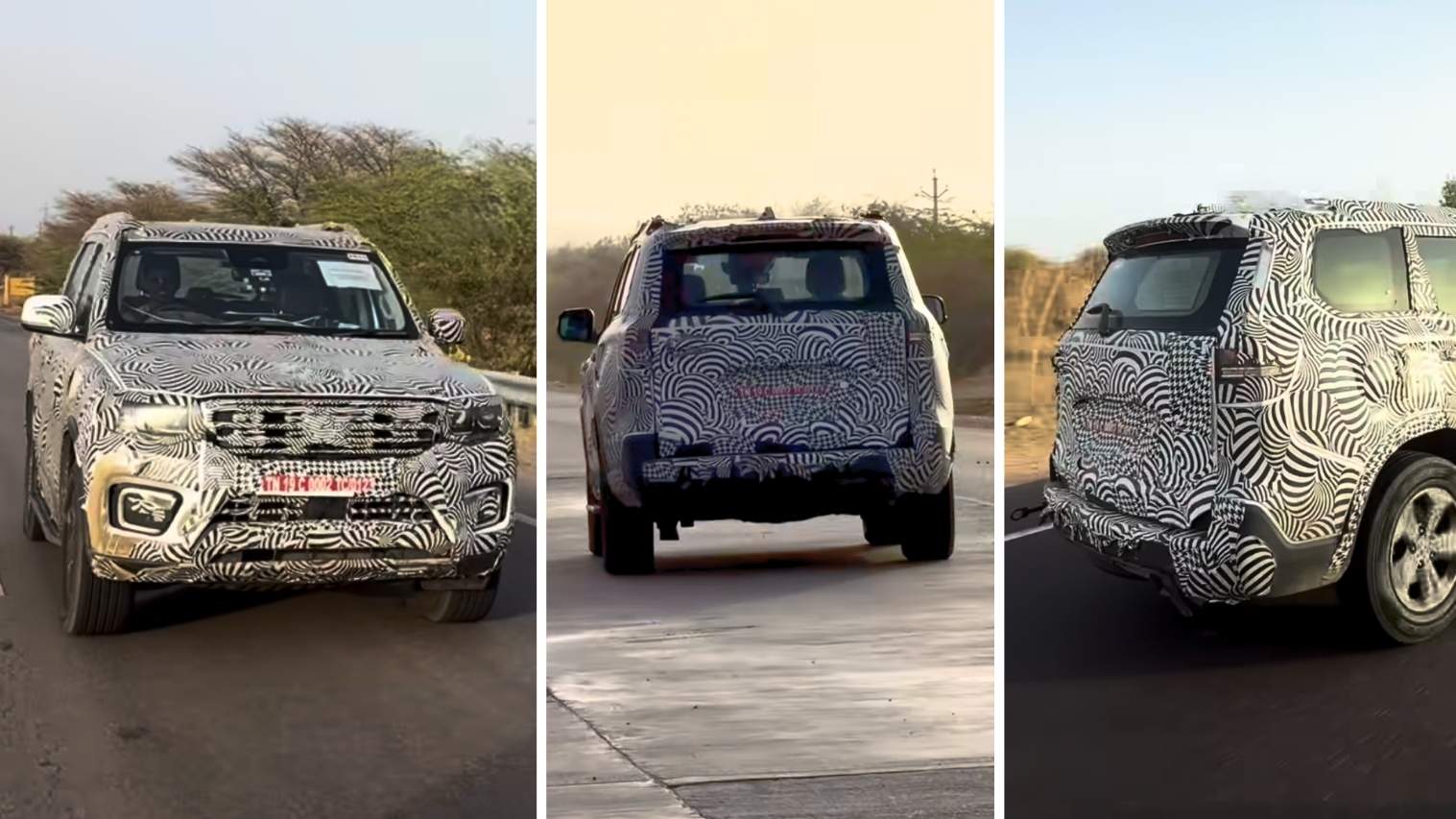
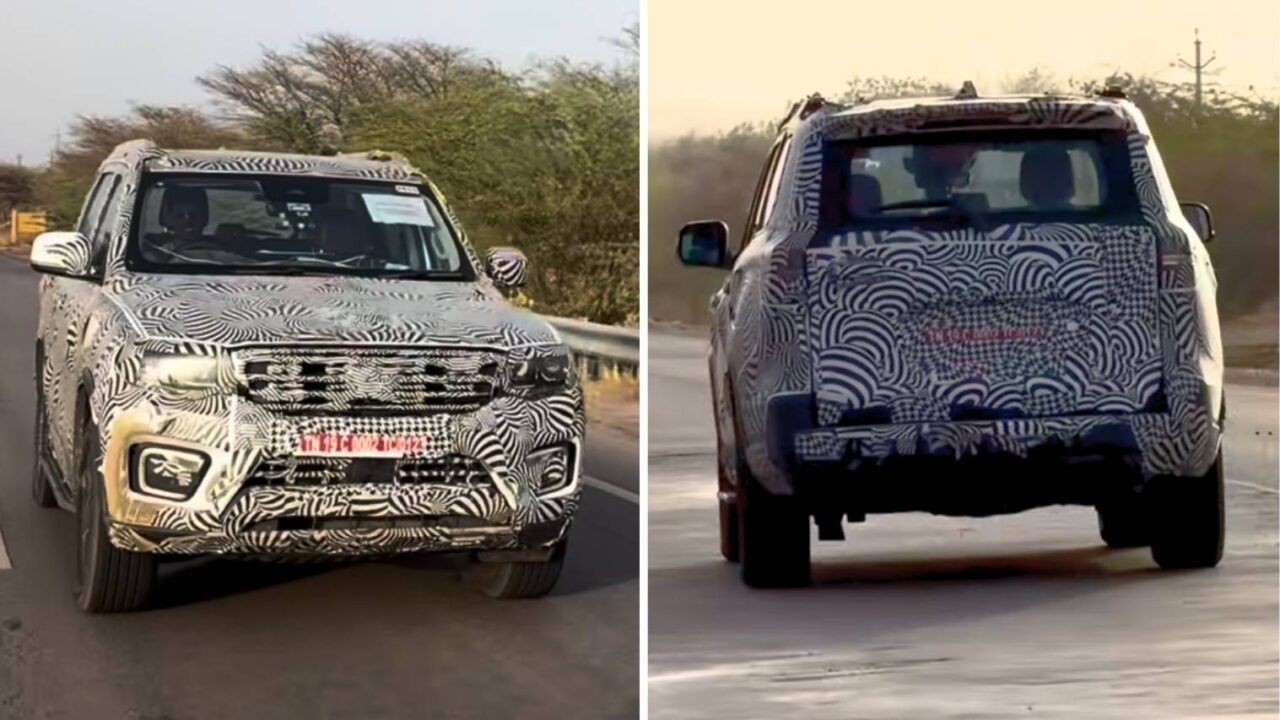
The Mahindra Scorpio-N, the second generation of the brand’s popular body-on-frame SUV, is set to turn four years old this month. Mahindra has started working on a facelift and is expected to roll it out soon.

Development of the new Mahindra Scorpio-N is in full swing ahead of launch, and recently, a prototype was spotted in Jaisalmer, possibly undergoing hot weather testing. Despite heavy camouflage, the prototype did reveal some design details of the upcoming model.

The facelifted Mahindra Scorpio-N appears to feature a new radiator grille with horizontal slots inspired by the Mahindra Vision.S concept introduced in August 2025. The rest of the front-end doesn’t seem to have any changes here, but the final version that will be launched will likely come with tweaked headlamps, a new lower air intake, and a redesigned bumper as well.

Also Read: Mahindra Sales Analysis May 2026; Scorpio, Thar, XUV 7XO, Bolero, XEV 9S

Mahindra Scorpio N facelift2
Pic Source: Sarsij Mishra

Mahindra could revise the exterior of the Scorpio-N with more changes, such as new 18-inch alloy wheels, a new rear bumper, and tweaked tail lights. The company may also introduce a new paint option to further distinguish the updated model from the current one. Inside, previous spy shots have revealed that the new Scorpio-N will feature a redesigned dashboard with new, horizontal AC vents instead of vertical ones in the centre.

The facelifted Scorpio-N will have a new, floating touchscreen infotainment system, possibly measuring 10.25 inches diagonally, up 2.25 inches from the current model’s dashboard-integrated unit. Another major upgrade expected on the tech front is a 10.25-inch fully digital instrument cluster, replacing the current model’s semi-digital unit, which consists of an analogue speedometer and tachometer and a 7-inch multi-information display.

Also Read: Top 10 EV Car Brands May 2026; Tata, Mahindra, MG, Maruti, VinFast, BYD

Mahindra Scorpio N facelift3
Pic Source: Sarsij Mishra

Mahindra will likely carry over the engines and transmissions of the Scorpio-N without any changes. Currently, the company offers a 2.0-litre turbocharged petrol engine that develops 200 hp and 370 Nm (with 6-speed MT)/380 Nm (with 6-speed AT) of torque; a 2.2-litre turbocharged diesel engine that produces 130 hp and 300 Nm of torque, linked to a 6-speed manual transmission; and a higher-output 2.2-litre turbocharged diesel engine with 172 hp of power and 370 Nm (with 6-speed MT)/400 Nm (with 6-speed AT) of torque.

The post New Mahindra Scorpio-N (Facelift) Spied On Test Again, Launch Likely Soon appeared first on Gaadiwaadi.com - Latest Car & Bike News by Amit Rawat.


from Gaadiwaadi.com – Latest Car & Bike News https://ift.tt/j1ZVHzo

McLaren Prices Cut By A Whopping Rs. 3.32 Crore Ahead Of India-UK FTA

GaadiWaadi -

McLaren GTS

McLaren 750S and GTS prices will be slashed by up to Rs. 3.32 crore in India as part of the soon-arriving India-UK FTA benefits

McLaren will ensure massive price reductions for its India lineup as part of the India-UK Free Trade Agreement coming into effect soon. The biggest beneficiary is the 750S Spider, which now costs Rs. 5.46 crore compared to its earlier sticker price of Rs. 8.78 crore, resulting in a reduction of Rs. 3.32 crore. The 750S Coupe has become cheaper by Rs. 3 crore while the grand touring-based GTS now carries a price tag lower by Rs. 2.32 crore.

The revisions stem from changes in import duties applicable to high-capacity British petrol vehicles under the India-UK Comprehensive Economic and Trade Agreement. It will reduce customs duty on British petrol cars powered by engines above 3,000 cc and diesel vehicles above 2,500 cc. Import duty for eligible vehicles will drop from the current 110 per cent to 30 per cent during the first year before gradually declining to 10 per cent within five years under an annual import quota mechanism.

Since both the McLaren 750S and GTS utilise a 4.0-litre twin-turbocharged V8 petrol engine, they qualify for the reduced duty structure. The Artura does not receive any revision as hybrid vehicles are excluded from these benefits during the initial five-year period. The largest reduction applies to the 750S Spider. Positioned as one of the quickest open-top supercars on sale anywhere in the world, the Spider combines a retractable hardtop roof with McLaren’s lightweight carbon-fibre architecture.

McLaren 750S

Model

New Price

Old Price

Reduction

750S Coupe

Rs. 4.94 crore

Rs. 7.94 crore

Rs. 3.00 crore

750S Spider

Rs. 5.46 crore

Rs. 8.78 crore

Rs. 3.32 crore

GTS

Rs. 3.83 crore

Rs. 6.15 crore

Rs. 2.32 crore

Power comes from a 4.0-litre twin-turbocharged V8 producing 740 hp and 800 Nm. An automatic transmission channels power to the rear wheels – enabling a 0 to 100 kmph sprint in just 2.8 seconds. The Spider retains nearly identical acceleration figures to the coupe despite the additional roof mechanism and can exceed 330 kmph flat out.

Model

Engine

Power

Torque

0-100 kmph

Top Speed

McLaren 750S Coupe

4.0L Twin-Turbo V8

740 hp

800 Nm

2.8 sec

332 kmph

McLaren 750S Spider

4.0L Twin-Turbo V8

740 hp

800 Nm

2.8 sec

332 kmph

McLaren GTS

4.0L Twin-Turbo V8

626 hp

630 Nm

3.2 sec

326 kmph

Its coupe sibling shares the same powertrain and chassis package. The McLaren 750S Coupe develops 740 hp and 800 Nm from the twin-turbocharged V8 while weighing less than many rivals thanks to extensive use of carbon-fibre construction. The supercar reaches 100 kmph from standstill in around 2.8 seconds and breaches the 200 kmph barrier in under eight seconds.

McLaren-750S-Spider.jpg

Advanced Proactive Chassis Control suspension, active aerodynamics and a rear-wheel-drive layout contribute to its reputation as one of the sharpest handling supercars currently available. The GTS caters to a different audience despite using the same 4.0-litre V8 architecture. The engine develops 626 hp and 630 Nm – coupled with a seven-speed dual-clutch automatic transmission. McLaren claims a 0 to 100 kmph time of around 3.2 seconds and a top speed beyond 325 kmph.

Additional luggage space, a more compliant suspension setup and improved everyday usability separate it from the more track-focused 750S range. All three models are built around McLaren’s carbon-fibre MonoCell architecture and feature carbon ceramic brakes, adaptive suspension systems, active rear wings and sophisticated traction management technologies.

The post McLaren Prices Cut By A Whopping Rs. 3.32 Crore Ahead Of India-UK FTA appeared first on Gaadiwaadi.com - Latest Car & Bike News by Surendhar M.


from Gaadiwaadi.com – Latest Car & Bike News https://ift.tt/NcuAd6Y

New Gen Audi Q7 Revealed With 630 Nm V6 Diesel & New Quattro AWD

GaadiWaadi -

New-2026-Audi-Q7.jpg

New Audi Q7 gets a 3.0-litre V6 diesel engine, upgraded mild-hybrid system, enhanced Quattro all-wheel-drive hardware and more

Audi has pulled the covers off the third generation Q7 as it has ushered in a comprehensive overhaul of its flagship three-row luxury SUV. A 3.0-litre V6 diesel engine, upgraded mild-hybrid system, enhanced quattro all-wheel-drive hardware, advanced lighting technology and a significantly improved cabin headline the changes.

The new Q7 is scheduled to enter global markets towards the end of 2026 and will continue to rival the BMW X5, Mercedes-Benz GLE, Volvo XC90 and Range Rover Sport. Powertrain upgrades form the foundation of the new Q7. Audi will offer the SUV with a 3.0-litre V6 diesel engine producing either 241 hp and 500 Nm or up to 295 hp and 630 Nm.

The diesel unit is coupled with the latest MHEV Plus mild-hybrid technology featuring a new powertrain generator capable of contributing up to 24 hp of additional output during acceleration. An electrically powered compressor further improves low-speed response by reducing turbo lag enabling better performance from standstill and during overtaking manoeuvres.

Engine Option

3.0-litre V6 Turbo Diesel

Power Output

180 kW / 220 kW

Torque Output

500 Nm / 630 Nm

Hybrid System

MHEV Plus Mild-Hybrid Technology

Additional Hybrid Boost

Up to 18 kW

Electric Compressor

Yes

Transmission

8-Speed Tiptronic Automatic

Drivetrain

Permanent Quattro AWD

New-2026-Audi-Q7-1.jpg

Every Q7 comes equipped with an eight-speed automatic transmission and permanent quattro all-wheel drive. Audi has also introduced a new limited-slip centre differential with preload, improving traction and torque distribution across varying road surfaces. Combined with the mild-hybrid assistance, the drivetrain has been engineered for better acceleration, power delivery and greater efficiency despite the SUV’s size and weight.

Customers seeking additional dynamic capability can opt for adaptive air suspension or adaptive air suspension sport – both featuring electronically controlled damping. The SUV is available with seven seats as standard and Audi has also developed a six-seat configuration for selected markets – replacing the conventional second-row bench with two individual captain chairs.

New-2026-Audi-Q7-Interior.jpg

All seats feature electric adjustment while the cabin layout has been optimised to maximise passenger comfort across all three rows. The luggage compartment offers 581 litres of storage space in normal configuration and expands to a substantial 1,980 litres when rear seats are folded. Additional storage areas have been integrated into the doors and centre console to improve day-to-day usability.

The redesigned centre console also houses dual Qi2 wireless smartphone charging pads, larger cupholders and extra storage solutions for passengers. One of the key additions is the new panoramic glass roof featuring switchable transparency technology – allowing occupants to alternate between transparent and opaque settings electronically.

New-2026-Audi-Q7-2.jpg

Integrated illumination enhances cabin ambience during night travel while increasing the sense of space during daytime driving. The optional Digital Matrix LED headlamps now utilise micro-LED modules capable of projecting high resolution light patterns directly onto the road – supporting lane guidance and display information linked to driver assistance systems.

At the rear, third-gen Digital OLED tail lamps introduce communication lighting functions and active digital light signatures. Consumers can choose from as many as eight different lighting signatures. During night-time lane changes or turns, the Q7 can project animated directional indicators onto the road surface to alert surrounding cyclists and pedestrians.

Door-mounted projection lamps create illuminated welcome patterns when entering or exiting the vehicle. Meanwhile, adaptive Driving Assistant Plus combines steering, braking and acceleration support while helping maintain lane position and distance from surrounding traffic. The trained parking function allows owners to teach the SUV specific parking manoeuvres which can then be repeated automatically. We can expect it to arrive in India in end-2026 or early 2027.

The post New Gen Audi Q7 Revealed With 630 Nm V6 Diesel & New Quattro AWD appeared first on Gaadiwaadi.com - Latest Car & Bike News by Surendhar M.


from Gaadiwaadi.com – Latest Car & Bike News https://ift.tt/FV8QGnR

4 New Hyundai Cars To Likely Launch Within 12-18 Months

GaadiWaadi -

New Hyundai SUV (4)

Multiple all-new SUVs and an all-new hatchback likely to make entry into Hyundai showrooms in India by next year

Facing stiff competition from homegrown rivals Tata Motors and Mahindra, Hyundai is planning a wave of new launches to defend its position in the Indian car market. The company is likely to launch four all-new models by 2027.

The first major launch from Hyundai in the near future will be the next-gen Bayon, a new mid-size SUV set to be positioned between the Venue and Creta. The next-gen Bayon should feature a more dynamic exterior than the Creta, which would make it more appealing to younger customers who prefer a sportier and more technical look over strong road presence.

Reports say the next-gen Bayon will debut a newly developed 1.2-litre turbocharged four-cylinder petrol engine, although a 1.0-litre turbocharged three-cylinder petrol engine is also expected to be offered at launch. Hyundai could introduce a hybrid powertrain option a year or two after the launch, expected to take place by September.

Also Read: Hyundai Model Wise Sales May 2026; Creta, Venue, Exter, Aura, Alcazar, Verna

2024 Hyundai Bayon Facelift_-3

In early 2027, Hyundai will likely launch its Tata Punch.ev rival, codenamed ‘HE1i’. The pure electric micro-SUV will feature a squarish silhouette, pixel-inspired front and rear lights, and a high ground clearance. The interior is expected to have a minimalist layout, with the cockpit area featuring a 9.9-inch digital instrument cluster and a 12.9-inch touchscreen infotainment system. Hyundai could offer two LFP battery pack options, with the larger one delivering a range of 375-400 kilometres.

Later in 2027, possibly in the summer, Hyundai will likely launch the next-gen Creta. Inspired by the Hyundai Crater concept, the all-new Creta will be underpinned by Hyundai Motor Group’s K3 platform and be significantly larger, likely measuring approximately 4.5 metres in length. Inside, the redesigned model would be noticeably spacious and likely adopt the same display concept as the aforementioned micro-SUV. Unlike the current Creta, the next-gen model is expected to be offered with a hybrid powertrain as an option, based on a 1.5-litre naturally aspirated petrol engine.

Also Read: Hyundai Creta ICE And EV Discounts Of Up To Rs. 1 Lakh

new hyundai creta spied
Image Source: car_charcha/Instagram

Hyundai is developing an all-new i20 as well, and it is likely to launch the fully redesigned premium hatchback in India at the end of 2027. Spy shots suggest it will have a familiar sporty character, but with a completely new design. Inside, these images have indicated that Hyundai is planning to offer a curved panoramic panel that seamlessly integrates the driver information display and the touchscreen infotainment system. Another major upgrade will likely be the availability of a slew of Level 2 advanced driver assistance systems.

The post 4 New Hyundai Cars To Likely Launch Within 12-18 Months appeared first on Gaadiwaadi.com - Latest Car & Bike News by Team GaadiWaadi.


from Gaadiwaadi.com – Latest Car & Bike News https://ift.tt/WqdFofI