Mahindra Bolero Maxx Launched, Priced At Rs. 11.19 Lakh

Mahindra Bolero MaXX Pik-Up front

Mahindra Bolero MaXX Pik-Up Launched, Offers 1.85 Tonnes Of Payload Capacity

Mahindra has launched the Bolero MaXX Pik-Up. The Bolero MaXX Pik-Up is a feature-rich pickup truck with CNG. The pickup truck offers a payload capacity of 1.85 tonnes and comes with a price tag of Rs. 11.19 Lakh (ex-showroom).

Dimensions

The Bolero MaXX Pik-Up features a single-cab design with seating capacity for three occupants. It measures 3050mm in length and is equipped with 16-inch tyres. Leaf springs are present on both axles for the suspension system.

Engine

The Mahindra Bolero MaXX Pik-Up is powered by a 2.5-litre turbocharged CNG engine. It produces 82 HP and 220 NM of torque at 1200-2200 RPM. It pairs with a 5-speed manual transmission for efficient performance.

Its 180-litre CNG tank provides a range of 400 Km for the pickup truck.

Features

The Bolero MaXX Pik-Up includes a height-adjustable seat for the driver and air conditioning for both heating and cooling. The Bolero MaXX Pik-Up is the first CNG-powered pickup truck which is equipped with the iMAXX telematics platform. The system delivers real-time vehicle insights, optimised for fleet management.

The post Mahindra Bolero Maxx Launched, Priced At Rs. 11.19 Lakh appeared first on MotorBeam.


from Car News | MotorBeam - Indian Car Bike News & Reviews https://ift.tt/RS7XN40

Bajaj Auto Records Nearly 3 Lakh Unit Sales In June 2025

GaadiWaadi -

Bajaj-Chetak-3001.jpg

The combined two-wheeler sales for Bajaj in the month of June 2025 stood at 2,98,484 units – a 2 per cent dip year-on-year

Bajaj Auto has reported a total sales of 3,60,806 units in the month of June 2025 enduring a marginal 1 per cent rise over the 3,58,477 units recorded during the same month last year. The growth was led entirely by exports, which rose 21 per cent, while domestic volumes fell 13 per cent during the month for the homegrown manufacturer.

In the two-wheeler category, domestic sales dropped sharply from 1,77,207 units in June 2024 to 1,49,317 units last month — a fall of 16 per cent. Export volumes, however, moved in the opposite direction, climbing to 1,49,167 units from 1,26,439 a year earlier, marking an 18 per cent increase. Thus, the combined two-wheeler sales for the month stood at 2,98,484 units – a 2 per cent dip year-on-year.

On the other side of the spectrum, commercial vehicle performance was a roller coaster ride. Domestic volumes remained flat at 39,143 units – down by just 101 units year-on-year while export numbers rose from 15,587 units in June 2024 to 23,179 in June 2025 – a jump of 49 per cent. The numbers brought total CV sales for the month to 62,322 units, reflecting a 14 per cent improvement.

Also Read: More Affordable Bajaj Chetak 3001 Launched In India At Rs. 99,990

2025-Bajaj-Pulsar-NS-125-ABS-2.jpg

Adding both segments together, Bajaj Auto’s June 2025 domestic sales closed at 1,88,460 units, compared to 2,16,451 units last year – a 13 per cent drop. On the other hand, total exports climbed to 1,72,346 units, up from 1,42,026 – translating to a 21 per cent gain. For the first quarter of this FY, Bajaj’s combined sales across two-wheelers and CVs totalled 11,11,237 units — up just 1 per cent over the 11,02,056 units recorded during Q1 FY25.

In the two-wheeler segment, domestic volumes for the quarter stood at 5,29,344 units, 9 per cent lower than the 5,82,497 units posted a year earlier. Exports in the same category rose 14 per cent, reaching 4,19,447 units, up from 3,68,420. This resulted in a flat quarterly total of 9,48,791 two-wheelers sold, versus 9,50,917 units in Q1 FY25.

Also Read: Bajaj’s New 125cc Motorcycle To Launch In FY2026 – Details

bajaj pulsar NS125

Meanwhile, commercial vehicles posted a quarterly total of 1,62,446 units – up 7 per cent year-on-year. The domestic sales slipped marginally to 1,05,464 units from 1,08,124 last year while exports surged 32 per cent, rising from 43,015 to 56,982 units. Cumulatively for the first quarter of FY26, Bajaj’s domestic sales across both segments fell 8 per cent to 6,34,808 units while exports went up 16 per cent to 4,76,429 units.

The post Bajaj Auto Records Nearly 3 Lakh Unit Sales In June 2025 appeared first on Gaadiwaadi.com - Latest Car & Bike News by Surendhar M.


from Gaadiwaadi.com – Latest Car & Bike News https://ift.tt/1ASIjN3

10+ New SUVs From India’s Top 4 Car Brands Within Next 12 Months

GaadiWaadi -

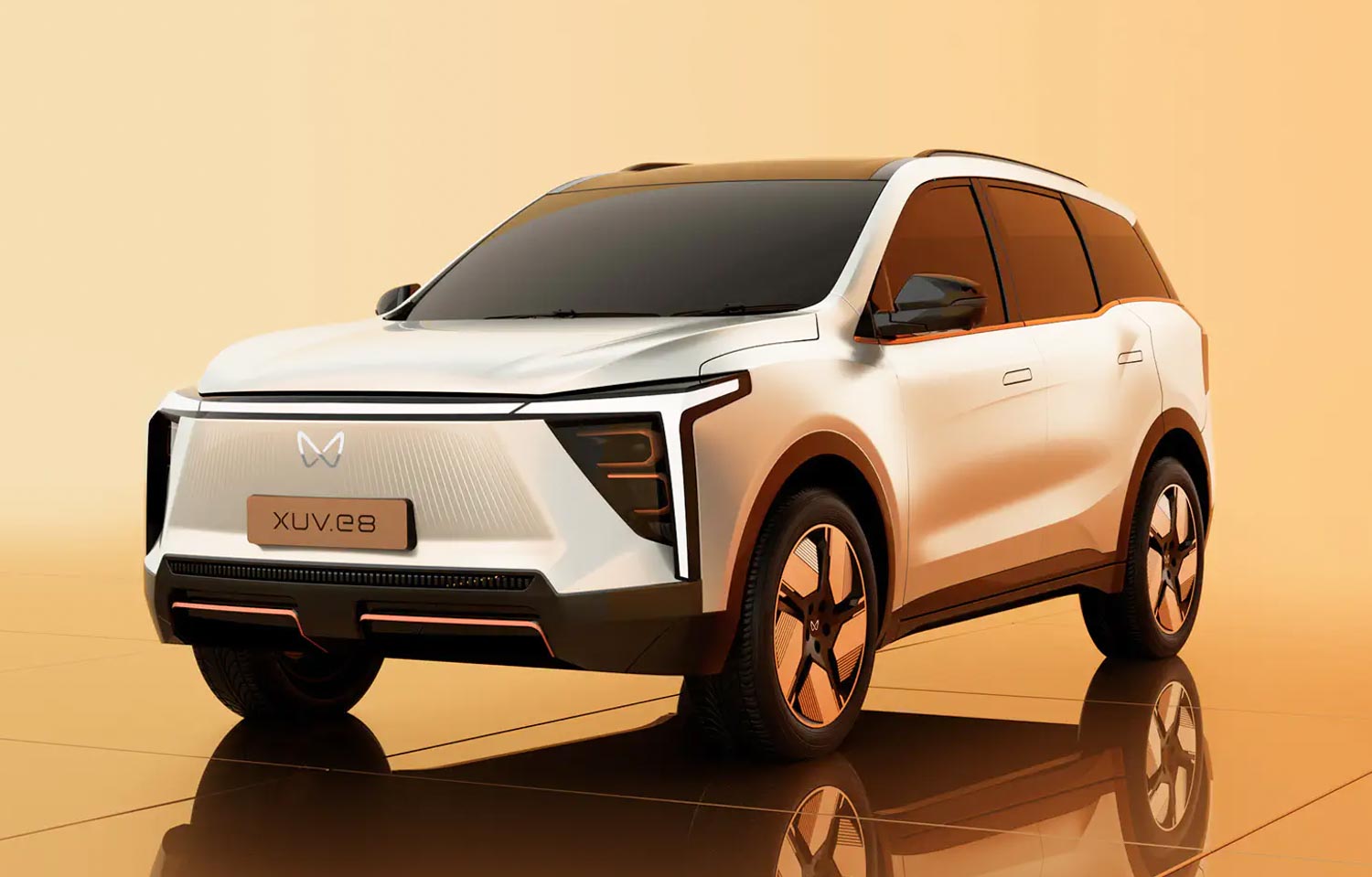
mahindra XUv.e8 rendering

Maruti Suzuki, Hyundai, Mahindra and Tata will bring in new SUVs across different segments over the next 12 months in India

The SUV space is set for a packed calendar over the next year with several manufacturers lining up launches across categories. Maruti Suzuki, Hyundai, Mahindra and Tata are working on new entries and some of these will be new nameplates while others will mark major generation updates. From compact crossovers to three-row SUVs, here is a snapshot of what is on the horizon:

1&2. Maruti Suzuki e Vitara & 5-Seater SUV:

New-Gen Grand Vitara

Maruti Suzuki is preparing an all-new five-seater SUV positioned just below the Grand Vitara and it is set to retail through Arena network. Interestingly, despite its placement, the SUV is expected to be marginally longer than the Grand Vitara itself. Powertrain options will include both 1.5-litre mild hybrid and 1.5-litre strong hybrid petrol units. Alongside this, the fully electric e Vitara is also being lined up for a festive season launch.

3. New Hyundai Venue:

2025-Hyundai-Venue1.jpg
Source: anurag choudhary/youtube

The second generation Hyundai Venue has been caught on test runs several times in recent months hinting at steady development progress ahead of launch in the coming months. Visual changes are expected both outside and inside with sharper design elements and a thoroughly updated cabin layout. Hyundai will also revise the feature list. Despite the overhaul, the powertrain lineup is set to remain unchanged.

Also Read: 5 New Hyundai & Kia Cars Arriving Over The Next 12-18 Months

4,5,6&7. New Tata Sierra ICE & EV, Harrier & Safari Petrol:

Tata’s new 1.5L turbo petrol engine is finally set to make its debut in the Harrier and Safari before the end of the current financial year. The new unit will produce 168 PS and 280 Nm, paired with either a six-speed manual or a seven-speed dual-clutch automatic gearbox. Meanwhile, work is also progressing on the revival of the Sierra badge which will return in both ICE and EV formats.

2025 tata sierra

The electric version will precede the launch of the ICE variant which will use the aforementioned 1.5L turbo petrol and the 2.0L diesel engines.

Also Read: 10+ New Tata Cars Waiting To Arrive In India – All Key Info

8,9,10,11&12. New Mahindra Bolero, XUV700 Facelift, 3-Door Thar Facelift, XUV3XO EV & XEV 7e:

Mahindra-XUV700-facelift-2026.jpg
Image Source: TamilMotors360

Mahindra is preparing an update for the XUV700 with a launch timeline reportedly set for early 2026. The revision is expected to bring subtle design changes inside and out along with a few feature additions. The brand is also working on two EVs – an electric variant of the XUV 3XO and the XUV700-derived XEV 7e. The three-door Thar is also waiting to receive a mid-life update in the coming months in India with changes based on the Roxx. Another highlighting upcoming launch will be the new-gen Bolero.

The post 10+ New SUVs From India’s Top 4 Car Brands Within Next 12 Months appeared first on Gaadiwaadi.com - Latest Car & Bike News by Surendhar M.


from Gaadiwaadi.com – Latest Car & Bike News https://ift.tt/JeEML2D

Xiaomi YU7 Amasses Over 2.89 Lakh Bookings In Under 60 Minutes

GaadiWaadi -

Xiaomi-YU7-Electric-SUV.jpg

The base long-range variant of the Xiaomi YU7, riding on 19-inch wheels, can deliver a range of up to 760 km in the CLTC cycle

Xiaomi’s first SUV, the YU7, made its market debut in China with prices beginning at RMB 253,500 (Rs. 30.23 lakh). Launched across three variants – Standard, Pro, and Max – the electric SUV enters the luxury EV space with strong momentum. The Standard variant is rear-wheel-driven and priced at RMB 253,500, the Pro brings in all-wheel-drive at RMB 279,900 (Rs. 33.37 lakh) and the Max variant, which focuses on high performance and AWD traction, tops the line up at RMB 329,900 (Rs. 39.34 lakh).

Within just one hour of price reveal, Xiaomi amassed over 2.89 lakh orders for the YU7, underlining immense demand in its home market. Considering the company only stepped into the automotive segment last year, the reception marks a significant milestone. Xiaomi focused heavily on proportions and body stance for the YU7’s exterior.

A long, sculpted bonnet and broad rear shoulder define the overall design which is supported by calculated ratios – 3:1 for wheelbase-to-body and 1.25:1 for width-to-height. These details reiterates both its sporty profile and aerodynamic performance. Up front, a pronounced crumple zone stretches to 659 mm, lending visual heft and added crash protection.

Also Read: Xiaomi’s First Electric SUV YU7 Revealed with 835 Km Range, Looks Stylish

Xiaomi-YU7-Electric-SUV-2.jpg

In total, nine exterior finishes are available, ranging from previously shown tones like Lava Orange and Basalt Grey to new ones such as Dawn Pink and Shadow Teal. Metallic flakes and pearl elements have been added to some hues for enhanced light play. Alloy wheel sizes go from 19 to 21 inches too. The base long-range variant riding on 19-inch wheels can deliver a range of up to 760 km in the CLTC cycle.

The larger 21-inch wheels, especially when fitted with Michelin Pilot Sport EV rubber, bring that figure down to 670 km in the Max variant. Some of the 21-inch wheels also come with floating centre caps and Brembo callipers painted red or yellow. On the inside, Xiaomi offers four cabin colour themes including a newly introduced Ash Grey & Iris Purple dual-tone option joining Pine Grey, Coral Orange and Twilight Blue.

Also Read: Xiaomi Showcases SU7 Electric Sedan In India, Launch Soon?

Xiaomi-YU7-Electric-SUV-Interior-1.jpg

Materials across 17 square metres of the cabin are OEKO-TEX certified, safe for skin contact, and used extensively on high-touch zones. The Nappa leather seats further that plush theme. The zero-gravity recliners with a 10-point massage function are available in the front while the rear row features heated recliners with 135-degree adjustability.

With the rear seat folded flat, the area transforms into a 1.8-metre bed while rear headrests have been thickened for better lateral support. Despite its coupe-like stance, the cabin offers generous space – headroom of 100 mm at the front, 77 mm at the rear and legroom of 73 mm for back seat occupants. Storage solutions span the entire interior with 36 compartments including a password-secured 13.7-litre glovebox, a rear drawer for daily essentials and a 4.6-litre smart fridge.

Xiaomi-YU7-Electric-SUV-Interior.jpg

The rear trunk can carry up to 687 litres and with the second row folded, capacity expands to 1,758 litres while a front trunk adds another 141 litres. A 25-speaker audio system tuned by Xiaomi and integrated with Dolby Atmos, dual wireless phone chargers with cooling vents are placed in the centre console, sun visors with multi-stage lighting, anti-glare interior mirrors and blind-spot monitoring wing mirrors are other highlights.

The top-end Max variants also gain exterior mirrors with anti-glare coating. Air quality is managed through a large HEPA filter certified to SGS Gold standard while the airflow is said to be soft and indirect, thanks to a 357 mm wide front vent and rear triple outlets. A rapid-refresh mode can cleanse the cabin atmosphere in just 35 seconds too. The YU7 is positioned above the SU7 sedan in Xiaomi’s EV roadmap. While Chinese deliveries have begun, timelines for other markets remain undisclosed.

The post Xiaomi YU7 Amasses Over 2.89 Lakh Bookings In Under 60 Minutes appeared first on Gaadiwaadi.com - Latest Car & Bike News by Surendhar M.


from Gaadiwaadi.com – Latest Car & Bike News https://ift.tt/3SELUZl

Toyota Explores Hydrogen Infrastructure To Support India’s Clean Energy Future

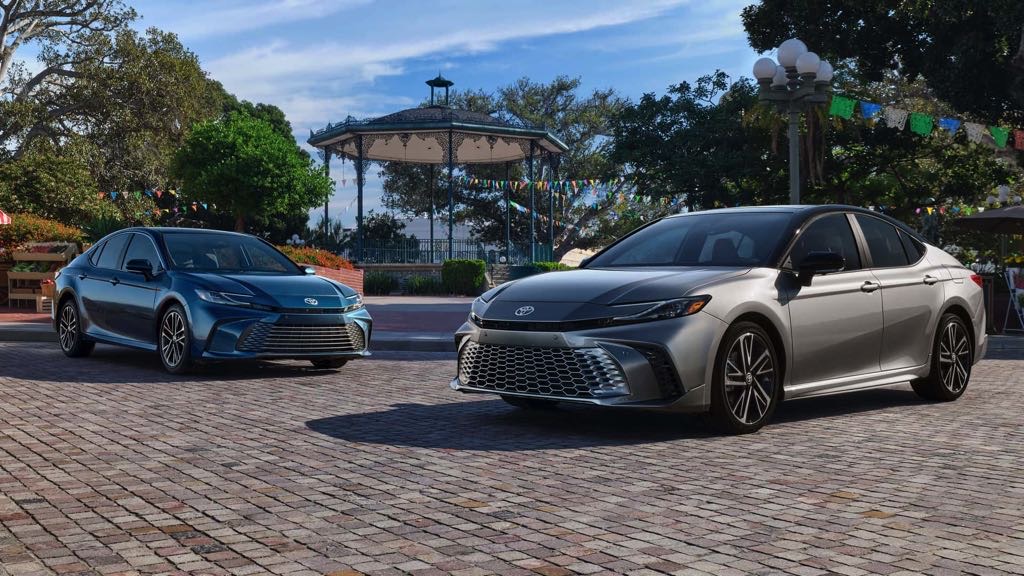
2025 Toyota Camry

Toyota explores hydrogen microgrid project with Ohmium to support India’s clean energy

Toyota Kirloskar Motor is advancing its efforts to promote clean energy in India through a pilot project exploring hydrogen-based microgrids, developed in partnership with electrolyser manufacturer Ohmium. The initiative aims to combine Toyota’s fuel cell technology with Ohmium’s electrolysers to create decentralised, off-grid green power solutions for industrial operations.

The pilot system, which produces green hydrogen using water and air, converts it into electricity via Toyota’s fuel cell stacks. If successful, this model could provide clean, reliable energy for sectors that require uninterrupted power, such as manufacturing facilities, data centres and remote industrial units.

Vikram Gulati, Country Head and Executive Vice President of TKM, highlighted the project’s significance in fostering innovation with Indian partners and building a roadmap for scalable hydrogen applications. He noted that this integration could offer energy solutions tailored to Indian conditions, particularly for regions with limited grid access.

Toyota’s focus extends beyond mobility, positioning itself as a clean energy enabler for India. The initiative aligns with the National Green Hydrogen Mission and India’s broader goals of achieving energy self-reliance and industrial decarbonisation by 2047.

According to Sudeep Dalvi, Senior Vice President and Head of State Affairs at TKM, hydrogen’s role as a clean energy carrier is critical for both stationary and transport applications. The company believes large-format transport, including freight trucks and intercity buses, could benefit from shared hydrogen infrastructure as production scales.

While the current focus remains on engineering, testing and system optimisation, localisation of key components could follow if the project proves commercially viable. Gulati indicated that integrating Ohmium’s electrolysers with Toyota’s fuel cells presents both technical challenges and opportunities, with the ultimate goal of creating an “Indianised” hydrogen energy solution.

This microgrid initiative builds on Toyota’s previous hydrogen-related efforts in India, including pilot projects with hydrogen-powered vehicles, collaborations on refuelling infrastructure and partnerships with commercial vehicle manufacturers.

The project has received support from key government officials, with Union ministers acknowledging its potential to contribute to India’s clean energy transition. Nitin Gadkari, Minister for Road Transport and Highways, described hydrogen as “the fuel of the future” and praised the collaboration’s alignment with India’s Atmanirbhar Bharat (self-reliant India) vision.

Although still in its early stages, Toyota’s hydrogen microgrid project reflects the company’s broader strategy to support India’s clean energy goals and promote the development of a decentralised hydrogen ecosystem for industrial and mobility applications.

The post Toyota Explores Hydrogen Infrastructure To Support India’s Clean Energy Future appeared first on MotorBeam.


from Car News | MotorBeam - Indian Car Bike News & Reviews https://ift.tt/uNawbyJ

Tata Harrier EV Stealth Edition Launched – All Key Highlights

GaadiWaadi -

Tata-Harrier-EV-2.jpg

Tata Harrier EV Stealth Edition gets a dark themed exterior and interior and is available in four variants

Tata Motors has officially announced the full price list of the Harrier EV, placing the electric SUV’s starting point at Rs 21.49 lakh (ex-showroom). Offered in multiple trims, the electric Harrier brings two battery pack choices to the table – a 65 kWh and q 75 kWh unit. The former can be bought in Adventure, Adventure S and Fearless+ grades.

Meanwhile, the latter can be had in Fearless+, Empowered RWD and Empowered QWD trims. The larger 75 kWh unit is reserved for the higher end variants, all of which form the basis of the Stealth Edition range as well. The Harrier EV Stealth Edition is spread across four specific variants: Empowered 75, Empowered 75 ACFC, Empowered QWD 75 and Empowered QWD 75 ACFC in India.

On the outside, the Stealth Edition boasts a matte black finish with a darkened front grille, blacked out badges and glossy black detailing swap in for the regular brightwork to differentiate itself from the standard model and is indeed sportier. The 19-inch alloy wheels follow a dual-tone treatment while Stealth branding appears in key areas.

Also Read: Tata To Bring In New ICE & Electric Cars Across Different Segments – Key Info

Tata-Harrier-EV-3.jpg

Inside, the cabin adopts the same philosophy with a full black dashboard layout and piano black surrounds on the centre console, HVAC vents and switchgear. The upholstery is also finished in black – keeping the overall ambience in sync with the edition’s darker theme. As for performance, the Harrier EV Stealth can be had with either a rear-wheel-drive configuration powered by a single motor or a dual-motor setup offering an all-wheel drive system.

The RWD version is rated at 235 bhp while the AWD configuration pushes out a combined 309 bhp and 504 Nm of torque. The real-world range from the 75 kWh battery is estimated between 460 and 490 km depending on which variant is selected. The ex-showroom prices for the Harrier.ev Stealth Edition place the Empowered 75 at Rs 28.24 lakh while the Empowered 75 ACFC comes in at Rs 28.73 lakh.

Also Read: 5 Big Things To Know About The Next-Gen Tata Sierra

Tata-Harrier-EV-5.jpg

Moving higher up, the Empowered QWD 75 carries a price tag of Rs 29.74 lakh and the top-spec Empowered QWD 75 ACFC is listed at Rs 30.23 lakh.

The post Tata Harrier EV Stealth Edition Launched – All Key Highlights appeared first on Gaadiwaadi.com - Latest Car & Bike News by Surendhar M.


from Gaadiwaadi.com – Latest Car & Bike News https://ift.tt/tphosNY

5 Upcoming 7-Seater SUVs You Should Wait For In India

GaadiWaadi -

MG-Majestor-2.jpg

Tata Safari will likely get a new 1.5-litre turbo petrol engine by the end of 2025; Mahindra XUV700 facelift will go on sale next year

The 7-seater SUV segment is growing at a consistent pace and banking on this trend, car manufacturers in India are working on multiple new models, which are slated for a debut in the coming years. In this article, we will look at the new 7-seater SUVs launching in India.

1. Mahindra XUV700 Facelift

Mahindra XUV700 Facelift1

The mid-cycle update of the XUV700 is scheduled for a launch next year i.e. 2026. The facelift model could likely be dubbed the XUV7XO and the test mule was recently spied testing, highlighting the new exterior design and triple-screen inside the cabin. In addition to this, new features will also be a part of the package. Under the hood, the familiar 2.2-litre mHawk diesel and 2.0-litre mStallion petrol engines will continue to power the XUV700 facelift, mated to the option of a 6-speed manual and a 6-speed torque converter automatic gearbox.

Also Read: Mahindra Teases New Platform Ahead Of Debut – To Underpin New Bolero?

2. Tata Safari Petrol

Updated Tata Safari Spied3

The petrol-powered version of the Safari is long due and we expect them to debut sometime by the end of 2025. The new 1.5-litre tGDi four-cylinder petrol engine will power the Safari that was first showcased at the 2023 Auto Expo. This new petrol mill will come with a power output rated at 168 bhp and 350 Nm of peak torque. It will get the option of a 6-speed manual and an automatic gearbox. The test mule of the Safari has been spotted multiple times in the last few months, hinting at its imminent launch.

3. Renault Boreal

Dacia Bigster-7
Dacia Bigster

Renault Boreal 7-seater SUV is confirmed for the Indian market. Based on the Dacia Bigster, the Boreal is expected to hit the domestic shores in the second half of 2026. The new three-row SUV will share the CMF-B platform with the Duster, and it will measure 230 mm longer than the Duster with an extended wheelbase of 43 mm. Under the hood, the Boreal will share the powertrain with the Duster, including the 154 bhp 1.3-litre turbo petrol engine and the 155 bhp 1.6-litre petrol strong hybrid option is also under consideration for the India-spec model.

Also Read: Renault Duster & Bigster To Go Hybrid In India – Here’s All You Need To Know

4. MG Majestor

MG-Majestor-1.jpg
Upcoming Majestor

MG is set to launch the Majestor SUV in the coming months and it will sell alongside the current Gloster. The Majestor features a refreshed exterior design, which resembles the Maxus D90 SUV sold in the international markets. Under the hood, the SUV will likely be powered by the familiar 2.0-litre twin-turbo diesel engine, putting out 216 bhp and 479 Nm of peak torque. It will be paired with an 8-speed automatic gearbox, channelling power to the rear wheels. Much like the Gloster, the 4WD setup will also be on offer.

5. Hyundai 7-Seater Hybrid SUV

hyundai tucson hybrid
Representational

Hyundai is developing a new 7-seater hybrid SUV for India. Internally codenamed Ni1i, the 3-row SUV will rival the likes of Mahindra XUV700 and Tata Safari. Expected to be positioned above Alcazar in the brand’s line-up, the new 7-seater SUV could use a 1.5 NA petrol engine paired with a strong hybrid system. This powertrain setup will likely be shared with the next-gen Creta. While the exact launch timeline is not available, the new Hyundai 7-seater SUV is expected to debut sometime in the year 2027.

The post 5 Upcoming 7-Seater SUVs You Should Wait For In India appeared first on Gaadiwaadi.com - Latest Car & Bike News by Team GaadiWaadi.


from Gaadiwaadi.com – Latest Car & Bike News https://ift.tt/Kmyt2Wh