Bajaj Auto Posts Over 4.60 Lakh Unit Sales In May 2026

GaadiWaadi -

updated-2026-bajaj-pulsar-150-2.jpg

Bajaj Auto’s exports continue to power growth as May 2026 volumes have risen by 20 per cent

More than 2.13 lakh vehicles shipped overseas in a single month helped Bajaj Auto post another telling performance in the month of May 2026. While domestic demand remained healthy across both two wheelers and commercial vehicles, exports once again emerged as the biggest contributor to the growth of the Chakan-based manufacturer.

Its total sales climbed to 4,61,257 units in May 2026 compared to 3,84,621 units during the same month last year with a 20 per cent increase. Export volumes rose at a much faster pace than domestic dispatches. As has been the case, the major contribution came from the two wheeler business conducted locally and abroad.

Combined domestic and export sales reached 3,93,204 units last month against 3,32,370 units in May 2025 resulting in an 18 per cent increase. The domestic two wheeler sales alone stood at 2,09,528 units – up 9 per cent from 1,91,412 units recorded a year earlier. Exports recorded a much larger gain as overseas two wheeler shipments increased 30 per cent to 1,83,676 units compared to 1,40,958 units during May 2025.

Bajaj-Chetak-C25.jpg

Category

May 2026

May 2025

Growth

2W Domestic

2,09,528

1,91,412

9%

2W Exports

1,83,676

1,40,958

30%

2W Total

3,93,204

3,32,370

18%

CV Domestic

38,503

34,321

12%

CV Exports

29,550

17,930

65%

CV Total

68,053

52,251

30%

Total Domestic

2,48,031

2,25,733

10%

Total Exports

2,13,226

1,58,888

34%

Grand Total

4,61,257

3,84,621

20%

The numbers accounted for nearly half of Bajaj Auto’s total two wheeler volumes during the month. Its commercial vehicles delivered an even better growth rate. Combined sales rose 30 per cent to 68,053 units from 52,251 units in the corresponding period last year. The local CV dispatches improved 12 per cent to 38,503 units.

It must be noted that exports surged 65 per cent to 29,550 units. The figures remains similar when the first two months of FY27 are examined. Between April and May 2026, Bajaj Auto recorded total sales of 9,75,049 units compared to 7,50,431 units during the same period last year with a 30 per cent increase.

2026 Bajaj Dominar 400

Two wheeler volumes reached 8,33,157 units during the period. Meanwhile, domestic sales improved 10 per cent to 4,19,591 units while exports jumped 53 per cent to 4,13,566 units as the gap between domestic and export volumes has narrowed considerably. The commercial vehicles posted the fastest growth within the portfolio.

The total volumes increased 42 per cent to 1,41,892 units from 1,00,124 units and local sales stood at 76,650 units, up 16 per cent while exports nearly doubled to 65,242 units from 33,803 units recorded during April to May 2025. The total exports across two wheelers and commercial vehicles climbed 57 per cent during the first two months of FY27 – compared to an 11 per cent increase in domestic volumes.

The post Bajaj Auto Posts Over 4.60 Lakh Unit Sales In May 2026 appeared first on Gaadiwaadi.com - Latest Car & Bike News by Surendhar M.


from Gaadiwaadi.com – Latest Car & Bike News https://ift.tt/W0uPiyC

4 New Tata SUVs Worth Waiting For – Arriving Within 9 To 12 Months

GaadiWaadi -

Tata-Sierra-Electric-EV-Teased.jpg

Tata appears to have a busy schedule ahead as four new SUVs are expected to launch over the next 9 to 12 months across different segments

Being one of the best-selling passenger vehicle makers in the country and heading the electric PV market, Tata Motors is all pumped to bring in new launches over the next 9 to 12 months across different segments. The company recently introduced refreshed models like the facelifts for Tiago ICE and Tiago EV as well as Punch ICE and Punch EV in India.

Expected around early 2027, the first production model from the new sub-brand, Avinya, will push Tata into territory it has never occupied before. Built on a locally adapted version of JLR’s EMA architecture, the debut model is expected to boasts a sportback body style, a high-tech cabin and a cleaner design language that will later influence future Avinya products.

More importantly, it will establish a premium electric portfolio above the current Tata lineup. At the other end of the spectrum sits a product looking to appeal to a completely different customer. Tata has already confirmed that its first flex fuel vehicle will arrive before the end of this year or during the opening months of 2027. The Punch micro SUV is widely expected to lead that initiative.

Also Read: Tata Motors To Introduce 4 AWD SUVs By Next Year

2026 tata punch facelift 1
Punch ICE Facelift

If launched as expected, it will add flex fuel capability to a range that already includes petrol, CNG and electric versions. The ability to operate on higher ethanol blends will stick the vehicle with the government’s biofuel strategy. Moving up the order, the upcoming Sierra EV is scheduled for the current quarter. The electric version will be underpinned by the Acti.ev+ architecture and share key hardware with the Harrier EV.

Two battery packs measuring 55 kWh and 65 kWh are expected. The larger unit could deliver more than 500 km of real world driving range while rear wheel drive and all wheel drive configurations are also likely. Tata is expected to position the Sierra EV above the Curvv EV giving consumers another option in the increasingly crowded midsize electric SUV category.

Also Read: 6 Upcoming Tata Cars FY27: Launch Timeline, Expected Price And More

Tata-Avinya-X-3.jpg

Expected later in FY27, the Safari EV will become Tata’s first electric SUV with three rows of seating. While much of its mechanical package will be shared with the Harrier EV, the added passenger capacity creates an entirely different use case. Large battery options, advanced driver assistance systems, connected technologies and multiple drivetrain configurations are expected to carry over.

The post 4 New Tata SUVs Worth Waiting For – Arriving Within 9 To 12 Months appeared first on Gaadiwaadi.com - Latest Car & Bike News by Surendhar M.


from Gaadiwaadi.com – Latest Car & Bike News https://ift.tt/yU8IS1O

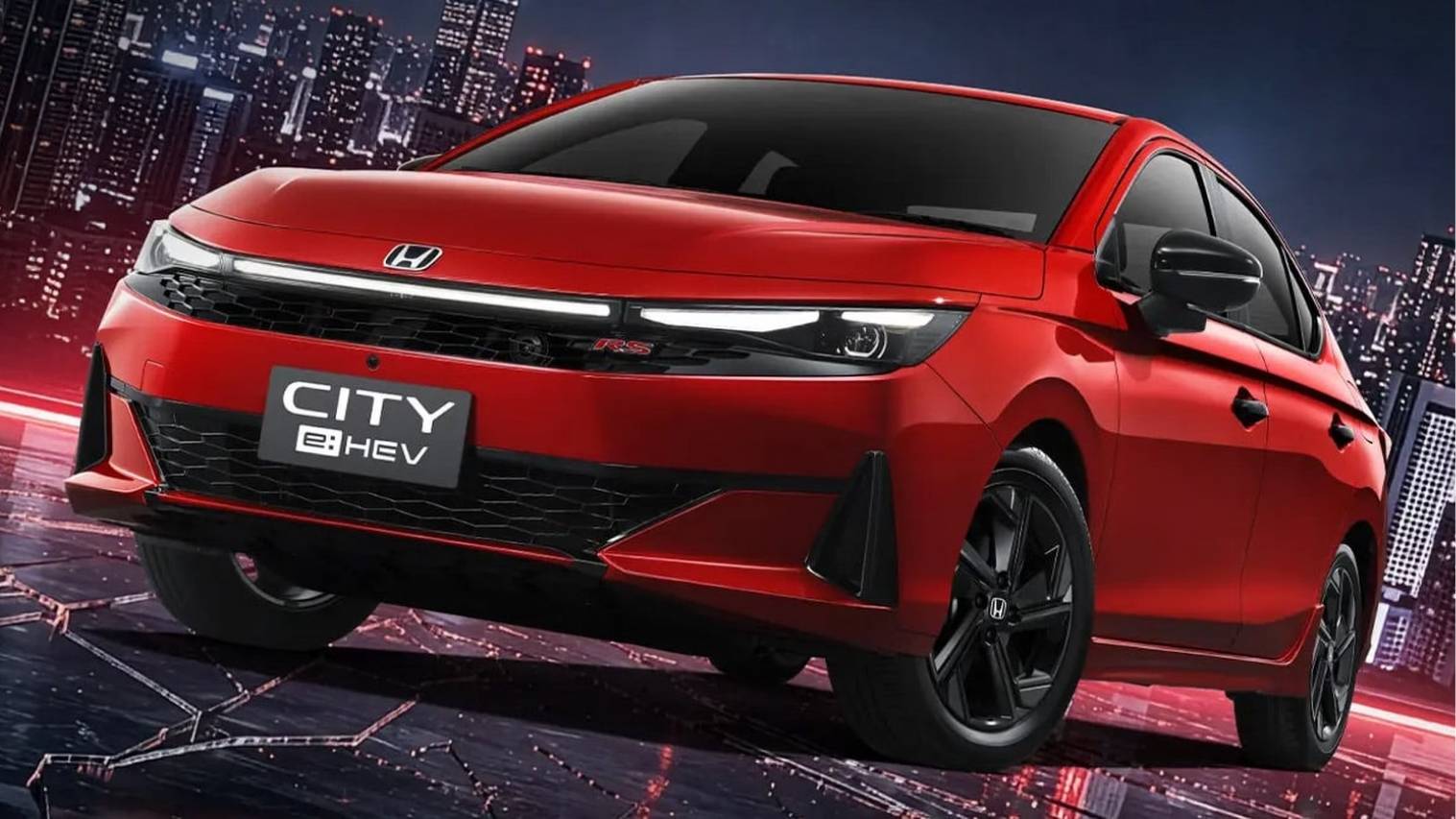
New Honda City (Facelift) Adopts A Sportier Styling In Thailand

GaadiWaadi -

New Honda City RS

Following India, Southeast Asian markets to get the new Honda City (facelift), starting with Thailand, where it is manufactured locally

The new Honda City, launched in India earlier this month, is undeniably the sportiest iteration of the fifth-generation model, first introduced in 2019. Just days after launching the new City in India, Honda has introduced it in Thailand, with an even sportier styling.

While the core exterior mirrors the new Honda City sold in India, the Thai version gets minor cosmetic upgrades in a special ‘RS’ trim. Black ORVMs, door handles, and shark fin antenna included in the RS trim give the Thai version an even sportier look. Moreover, unlike the Indian version, it features a boot lid spoiler as well, also finished in black.

As for the interior, Honda has not completely revealed the design of the Thai version. The company has confirmed the availability of a 10-inch touchscreen infotainment system with wireless Apple CarPlay and Android Auto, an auto-dimming rear-view mirror, a 360º camera system, and a wireless smartphone charging pad. Unlike in India, there’s no mention of ventilated front seats in Thailand.

Also Read: 2026 Honda City Facelift Variant Wise Features, Specs, Mileage & Prices Detailed

New Honda City RS (1)

Honda plans to launch the new City in Thailand in a total of four trims: S, V, SV, and RS. All except the base S trim will feature a hybrid system as standard. Another major difference from the Indian model will be that the petrol variant will come with a 1.0-litre turbocharged petrol engine that produces 121 hp and 173 Nm of torque, linked to a CVT. The hybrid variants use the combination of a 1.5-litre petrol engine producing 97 hp and 127 Nm of torque and an electric motor.

In India, the new Honda City has been launched in SV, V, ZX, and ZX+ grades, priced from Rs. 12,07,900 (ex-showroom) to Rs. 17,22,900 (ex-showroom). The hybrid variant, which is no longer marketed as a separate model, is only available in a ZX+ grade, priced at Rs. 21,07,900 (ex-showroom). There’s no word on the RS trim being introduced in India.

Also Read: India-Spec Honda ZR-V Hybrid SUV Revealed, Deliveries To Begin In July 2026

New Honda City RS (2)

The petrol variant has a 1.5-litre engine producing 119 hp and 145 Nm of torque. It comes paired with a 6-speed MT or a CVT and delivers a fuel economy of 17.77 km/l (manual)/17.97 km/l (automatic). The hybrid variant combines a 1.5-litre petrol engine that develops 99 hp and 131 Nm of torque with an electric motor that generates 107 hp and 253 Nm of torque. In total, there’s 125 hp of power available at disposal. The hybrid variant delivers a fuel economy of 27.26 km/l.

The post New Honda City (Facelift) Adopts A Sportier Styling In Thailand appeared first on Gaadiwaadi.com - Latest Car & Bike News by Team GaadiWaadi.


from Gaadiwaadi.com – Latest Car & Bike News https://ift.tt/w9Q38CR

Electric Cars Account For 7% In Total Passenger Vehicle Sales In May 2026

GaadiWaadi -

Mahindra BE 6 Batman Edition (1)

The rising fuel prices, improving charging infrastructure and elimination of range anxiety are the reasons behind the surge in EV sales

The electric car sales in India picked up in May 2026 as it accounted for nearly 7 percent of the total passenger vehicle volumes. It is the highest share of EVs in overall car sales in the last year or so. The rising fuel prices, improving charging infrastructure and elimination of range anxiety are considered to be the foremost reasons behind the surge in EV sales. A total of 21,953 units of all-electric battery-powered cars were sold in May as the overall passenger car retail volumes stood at 317,354 units.

The EV share in total car sales was at 4.1 percent and 4.2 percent in January and February. It is believed that the recent hike in petrol, diesel and CNG rates compelled the buyers to shift towards electric mobility. If we compare it on a YoY basis, the share of EVs in total car sales was at 4.7 percent in May 2025 which has now climbed up to 6.9 percent.

Even in March 2026, EVs grabbed 5.9 percent share in total passenger vehicle sales. This shift is not just limited to four-wheelers but also visible in the two-wheeler segment as electric models accounted for 8.9 percent of total sales in the scooter and motorcycle segment in May 2026. Just so you know, electric two-wheelers had a share of 6.7 percent in Jan 2026 two-wheeler sales.

Also Read: 2026 Tata Tiago ICE, CNG & Electric Facelifts Launching In India Tomorrow

tata-nexon-EV-Dark-Red.jpg

The Indian two-wheeler industry recorded overall sales of more than 16 lakh units in May 2026. The e2w segment registered sales of 1.44 lakh units this month, which is a decent number, considering the lack of long range models. The EV penetration is rapidly growing in passenger vehicles as it has already increased by around 3 percentage points during the last four months.

The higher demand for electric vehicles clearly suggests that rising fuel prices are a major concern for the buyers. Though EVs still have not reached the double-digit share in four-wheeler sales, the swift rise in market share since the beginning of 2026 indicates that the transition is moving faster than overall vehicle demand growth.

Also Read: Honda To Introduce New SUVs, Hybrids & Electric Cars Soon In India

Maruti-e-Vitara.jpg

Several leading auto brands such as Maruti Suzuki, Hyundai, and Mahindra offer electric cars with driving range of more than 500 km on a single charge. On the other hand, various other reputed auto companies like Tata Motors and MG Motor have rolled out affordable EVs with starting prices as low as Rs 6-7 lakh (ex-showroom). Automakers like Kia and BYD retail 7-seater family electric cars in the Indian market.

The post Electric Cars Account For 7% In Total Passenger Vehicle Sales In May 2026 appeared first on Gaadiwaadi.com - Latest Car & Bike News by Team GaadiWaadi.


from Gaadiwaadi.com – Latest Car & Bike News https://ift.tt/31wY84O

3 New Compact SUVs With A Hybrid Powertrain In The Pipeline

GaadiWaadi -

renault bridger (7)

Following mid-size SUVs over the recent years, compact SUVs to start getting fuel-sipping electrification tech from next year

Hybrid powertrains have started becoming a popular choice among SUVs in India following the arrival of the Toyota Urban Cruiser Hyryrder, Maruti Grand Vitara, and Maruti Victoris. While currently their availability is mainly to the mid-size segment, from next year, even compact SUVs will be available with a hybrid system.

In the first half of 2027, Maruti Suzuki is expected to introduce a facelifted version of the Fronx, and along with this major refresh, the company will likely roll out a hybrid powertrain. Unlike other hybrid cars sold in India, this one would feature series-hybrid technology, in which the petrol engine is not connected to the wheels and only used as a generator.

Media reports suggest the Fronx Hybrid will have a modified version of Maruti Suzuki’s Z12E 1.2-litre naturally aspirated three-cylinder petrol engine under the hood. There’s no word on the type or output of the electric motor that will be driving the front wheels, but this setup is expected to deliver a fuel economy of around 35 km/l, which would make it one of the most efficient cars in our market.

Also Read: 3 Upcoming Hyundai Hybrid SUVs You Should Wait For In India

Maruti Fronx Hybrid
Maruti Fronx Hybrid

In the second half of the year, Renault will launch the production version of the Bridger concept. Designed and engineered mainly for India, the Bridger will feature a squarish body, a high ground clearance, hidden rear door handles, and a truly spacious and generously equipped interior.

Renault has confirmed that it will offer a hybrid powertrain as an option in the Bridger, and media reports say the electrified variant’s motive power will come from a 1.2-litre three-cylinder petrol engine. Whether the company plans to give this option right from launch or introduce it a few months later remains to be seen.

Also Read: All-New Toyota Compact Land Cruiser SUV To Likely Debut In 2028

2026-Kia-Sonet.jpg
2026 Kia Sonet

Kia is working on the second-gen Sonet with plans to launch it in 2027. The company recently started testing the future model on public roads with prototypes featuring the final design. It has also recently confirmed that it will introduce a hybrid powertrain in the Sonet by 2029, and we expect that to happen only after the full model change due next year, sometime in 2028.

The post 3 New Compact SUVs With A Hybrid Powertrain In The Pipeline appeared first on Gaadiwaadi.com - Latest Car & Bike News by Team GaadiWaadi.


from Gaadiwaadi.com – Latest Car & Bike News https://ift.tt/27onbJX

3 Upcoming Hyundai Hybrid SUVs You Should Wait For In India

GaadiWaadi -

Upcoming Hyundai Hybrid SUVs

Hyundai is planning to bring in a host of new hybrid SUVs to India over the next couple of years and here is a brief look at them

Nearly 80 per cent of India hybrid passenger vehicle volumes currently come from Toyota and Maruti Suzuki products – leaving a gap that Hyundai has not yet entered properly. It could change over the next few years as the Korean brand prepares three hybrid SUVs across separate price bands starting from the next generation Creta.

The most important model in this plan will be the Creta SX3 which is expected around 2027. The Creta already crossed two lakh annual sales in FY26 making it the only midsize SUV in India to reach the mark during the financial year. A hybrid version in this segment would therefore not be a niche addition. It would arrive inside one of the strongest selling SUV nameplates in the country.

The next-gen Creta will use a new K3 platform and is expected to grow in size compared to the current model to around 4.5 metres in length. Test mules have already suggested a larger body while the cabin will receive a deeper technology and material upgrade. Petrol, turbo petrol and diesel engines could remain unchanged but the hybrid variant will become the biggest mechanical upgrade.

Also Read: New Hyundai Creta Spied Alongside Existing Model Showing Big Size Difference

2024-Hyundai-Tucson-2.jpg

Hyundai is also preparing a larger three-row SUV internally known as Ni1i. It will sit above the Alcazar and below the recently discontinued Tucson giving the brand a new product in a higher family SUV category. A debut around late 2027 is expected and hybrid tech will be central to its positioning.cIt could use a modified version of Hyundai 1.5-litre petrol engine paired with electric assistance.

The system is expected to support electric only running at low speeds which should help fuel efficiency during city use. This same setup could move into the Creta and Seltos as well allowing Hyundai Motor Group to spread hybrid technology across higher volume models. At the upper end, Hyundai is studying the Palisade Hybrid for India.

Also Read: Hyundai And Kia To Launch 4 New Cars By March 2027

Hyundai-Palisade-Hybrid-India.jpg

If launched around 2028, it would become the most premium Hyundai ICE SUV in the country. Globally, the Palisade Hybrid combines a turbocharged petrol engine with an electric motor inside a full-size seven seat package. In the near future, we do expect Hyundai to introduce more SUVs with hybrid tech in the budget end of the spectrum.

The post 3 Upcoming Hyundai Hybrid SUVs You Should Wait For In India appeared first on Gaadiwaadi.com - Latest Car & Bike News by Surendhar M.


from Gaadiwaadi.com – Latest Car & Bike News https://ift.tt/63xHcbd

Mahindra To Bring In Several New ICE & e-SUVs Across Different Segments

GaadiWaadi -

Mahindra-Vision-X-3.jpg

Mahindra is planning to introduce a host of new SUVs across different categories and price points over the next five years

Four concepts shown in August 2025 form the base for Mahindra’s next major SUV launch proposition. Vision S, Vision X, Vision T and Vision SXT were not design exercises alone as their road going versions will begin dripping into the portfolio across different segments and price points with the Vision S based compact SUV arriving first.

The NU_IQ platform sits at the centre of this plan. It has been engineered to accept both combustion and electric powertrains allowing Mahindra to create different body styles and drivetrain combinations. Its flexibility becomes important because the company is now preparing a much larger product plan than the one it had outlined earlier.

Nine new ICE nameplates are part of the upcoming pipeline. These will not be simple facelifts or badge extensions. Mahindra is preparing new products across multiple price ranges with the Vision S based sub-four-metre SUV expected to next year. It will be positioned above the XUV 3XO and could compete against the forthcoming Renault Bridger and Kia Syros.

Also Read: Mahindra Vision S-Based Compact SUV To Likely Be Priced Competitively

Mahindra Vision S (2)

The Vision T appears to preview a Thar-influenced electric direction while Vision X and Vision SXT could help Mahindra cover more mainstream SUV slots later in the decade. Production derivatives from these concepts are expected to carry different identities under existing sub brands. Only two ICE updates in the roadmap are linked to existing models.

The three-door Thar facelift is expected as part of the plan while the Scorpio N mid-cycle update has already been spotted testing. The latter could receive a panoramic sunroof, ventilated front seats and cabin revisions with no major engine change expected. The expanded roadmap now includes 16 launches by 2031 and of which ten will use internal combustion engines and six will be electric SUVs.

Also Read: 15+ Upcoming Mahindra SUVs You Should Know About – ICE & EVs

Mahindra Vision.T (2)

It is a revision over the older plan that had listed nine ICE models and seven EVs by 2030.
Mahindra had already completed a large part of that earlier target between FY2025 and FY2026. The BE.07 is the nearest electric arrival from this next batch. It has already entered road testing and will sit above the BE 6 when launched in 2027.

It will use the INGLO architecture while later EVs will be spread across INGLO and NU_IQ depending on size, positioning and drivetrain needs. Mahindra is therefore not treating ICE and EV development as separate battles. The company is building two connected SUV pipelines with familiar name families, new platforms and multiple powertrain choices running side by side until 2031.

The post Mahindra To Bring In Several New ICE & e-SUVs Across Different Segments appeared first on Gaadiwaadi.com - Latest Car & Bike News by Surendhar M.


from Gaadiwaadi.com – Latest Car & Bike News https://ift.tt/TVHDOCP