GST 2.0 Effect: Kia Announces Price Cuts Of Up To Rs. 4.5 Lakh

GaadiWaadi -

carens clavis

Kia slashes prices across its ICE model line-up to make its cars more competitive based on the revised GST structure introduced last week

Following the Indian government’s decision to reduce GST on cars last week, Kia has announced price reductions as high as 4.5 lakh rupees on its cars. The company will pass on the full benefit of the tax revisions to customers from 22nd September.

The Kia Sonet, the starting point in the South Korean automaker’s Indian line-up, will see price reductions of up to 1,64,471 rupees. At present, Kia offers its Hyundai Venue rival for a price of anywhere between 7,99,900 rupees and 15,63,900 rupees, both ex-showroom Delhi.

The more expensive Kia Syros, which has not been selling well, courtesy of its polarising exterior, will receive bigger price cuts of up to 1,86,003 rupees. Currently, the premium sub-4 metre SUV’s fall in the 9,49,900-17,79,900-rupee range (ex-showroom Delhi). In July, while the Sonet recorded 7,627 units in sales, the Syros registered just 11% of that volume, 834 units to be specific.

Kia Syros 1

Model

Maximum Price Reduction

Kia Sonet

Rs. 1,64,471

Kia Syros

Rs. 1,86,003

Kia Seltos

Rs. 75,372

Kia Carens

Rs. 48,513

Kia Carens Clavis

Rs. 78,674

Kia Carens Clavis EV

Kia EV6

Kia Carnival

Rs. 4,48,542

The Kia Seltos, which is close to the end of its lifecycle, will see price reductions of up to just 75,372 rupees. The Indian government continues to penalise all cars longer than 4,000 mm except for BEVs, irrationally classifying them all as luxury goods. It has reduced the GST on them from 45-50% to just 40%. Currently, the Seltos is priced from 11,18,900 rupees to 20,55,900 rupees, both ex-showroom Delhi. Kia has started testing the next-gen Seltos in India and will likely launch it in the first half of 2026.

Higher up in the Kia line-up, the Carens, which costs 11,40,900 rupees (ex-showroom Delhi) in petrol and 13,25,900 rupees (ex-showroom Delhi) in diesel, will get cheaper by up to 48,513 rupees. The facelifted version of this MPV, the Carens Clavis, is available for 11,49,900-21,49,900 rupees (ex-showroom Delhi). Kia plans to reduce its prices by up to 78,674 rupees (ex-showroom).

kia seltos gravity edition

The Kia Carens Clavis EV will not see any price revisions, as the GST on BEVs has remained unchanged at 5%. The electric MPVs prices start at 17,99,000 rupees (ex-showroom Delhi) and go up to 24,49,000 rupees (ex-showroom Delhi). Similarly, the new Kia EV6 will remain priced at 65,96,638 (ex-showroom Delhi).

The Kia Carnival, imported via the CBU route like the new Kia EV6, will get the biggest price cut – 4,48,542 rupees. At present, Kia offers the seven-seat premium minivan for a price of 63,91,000 rupees (ex-showroom Delhi).

The post GST 2.0 Effect: Kia Announces Price Cuts Of Up To Rs. 4.5 Lakh appeared first on Gaadiwaadi.com - Latest Car & Bike News by Team GaadiWaadi.


from Gaadiwaadi.com – Latest Car & Bike News https://ift.tt/x9Hisnt

GST 2.0 Benefits: Tata CV Prices Drop By Up To Rs. 4.5 Lakh

GaadiWaadi -

Tata-Trucks-AC-2.jpg

Tata Motors to pass entire GST reduction benefits to commercial vehicle customers; New prices will come into effect from 22nd September

Tata Motors has announced that it will pass on the full benefit of the recent GST reduction on its entire commercial vehicle range to customers. The India’s largest commercial vehicle manufacturer’s entire line-up will get a price reduction, ranging from Rs. 30,000 and going all the way up to Rs. 4.65 lakh.

The updated prices will be effective from September 22, the same day when the revised GST rates come into effect. This move is in line with the reduction in GST on commercial vehicles to 18%. The price reduction will vary depending upon the vehicle category, however, the GST benefits will be valid across the range.

Talking about the potential reduction in price range, the heavy commercial vehicle (HCV) segment will get the highest cut in the range of Rs. 2.80 lakh to Rs. 4.65 lakh. The buses and vans will see a price reduction in the range of Rs. 1.20 lakh to Rs. 4.35 lakh. On the other hand, the intermediate and light commercial vehicle (ILMCV) segment’s price will be reduced between Rs. 1 lakh and Rs. 3 lakh.

Also Read: Tata Motors To Launch Four Petrol Cars This Fiscal

Tata-Prima.jpg

Product Reduction in price range
HCV Rs. 2,80,000 to 4,65,000
ILMCV Rs. 1,00,000 to 3,00,000
Buses & Vans Rs. 1,20,000 to 4,35,000
SCV Passenger Rs. 52,000 to 66,000
SCV & Pickups Rs. 30,000 to 1,10,000

The small commercial vehicle (SCV) passenger segment will get a price cut in the range of Rs. 52,000 to Rs. 66,000. The small commercial vehicle (SCV) and pickups will get a price reduction between Rs. 30,000 and Rs. 1.10 lakh.

By reducing prices across the commercial vehicle range, Tata Motors aims to further lower the Total Cost of Ownership (TCO) for transporters, fleet operators, and small businesses. This will encourage faster fleet modernisation with greater access to advanced and cleaner mobility solutions, enabling transporters to reduce costs, improve operational efficiency and increase profits.

Also Read: Tata Officially Announces GST Price Reduction – Up To Rs. 1.55 Lakh

Tata-Signa.jpg

Speaking on the price reduction, Mr. Girish Wagh, Executive Director, Tata Motors, said, “The reduction in GST on commercial vehicles to 18% is a bold and timely step towards revitalizing India’s transport and logistics backbone. Tata Motors is proud to extend the full benefit of the GST reduction on all our commercial vehicles to customers across the country. With a rich legacy of trust and an expansive portfolio of future-ready vehicles and mobility solutions, we continue to be the partner of choice for those who move India forward- empowering businesses, enabling mobility, and fueling growth.”

The post GST 2.0 Benefits: Tata CV Prices Drop By Up To Rs. 4.5 Lakh appeared first on Gaadiwaadi.com - Latest Car & Bike News by Team GaadiWaadi.


from Gaadiwaadi.com – Latest Car & Bike News https://ift.tt/W0cY4Hk

Skoda Epiq Breaks Cover – Previews The Brand’s Most Affordable EV Yet

GaadiWaadi -

skoda-epiq-1.jpg

Skoda Epiq to enter production in 2026 and it will slot below the Enyaq in the brand’s global lineup

Skoda has taken the wraps off its Epiq show car – a compact all-electric city SUV that previews its most affordable EV yet. Positioned to enter production in 2026, the Epiq will slot below the Enyaq in the brand’s global lineup and hopes to bring electrification to a wider range of customers. The unveiling took place during the Volkswagen Group’s media workshop ahead of the IAA in Munich.

The Skoda Epiq measures 4.1 metres in length and offer 475 litres of boot space. A further highlight is its driving range –  claimed at up to 425 km on a single charge. Pricing for the production model is expected to be comparable to Skoda’s Kamiq. It is the first model to fully embrace the brand’s Modern Solid design language.

The exterior wears Cashmere matt paintwork accompanied by a glossy black face and T-shaped LED lighting signatures. Strong shoulders are defined by a sharp tornado line and a contrasting glasshouse. Step inside the cabin and the Epiq is said to give weight to everyday usability as it has been designed around versatile luggage solutions.

skoda epiq

It features hidden underfloor compartments, bag hooks and fastening points. The minimalist dashboard integrates wireless phone charging, haptic scroll wheels and physical controls. In keeping with the brand’s digital first philosophy, the Epiq gets latest connectivity options and advanced assistance systems.

The interior emphasises space, simplicity and comfort without straying into over-styled territory. The production model will be manufactured at Volkswagen’s Navarra plant in Spain – forming part of the Electric Urban Car Family project under the Brand Group Core.

skoda epiq 2

Alongside Skoda, SEAT, CUPRA and Volkswagen will also launch compact EVs under this initiative – focussing on affordability through shared development and economies of scale. VW has unveiled the ID.CROSS concept as well which will give rise to a production-spec version of the compact electric SUV sometime next year.

For Skoda, the Epiq indicates a decisive move into the entry-level electric SUV segment. As for India, the company is currently working on the facelifted avatar of the Kushaq midsize SUV and it recently brought in the Kylaq ICE compact SUV.

The post Skoda Epiq Breaks Cover – Previews The Brand’s Most Affordable EV Yet appeared first on Gaadiwaadi.com - Latest Car & Bike News by Surendhar M.


from Gaadiwaadi.com – Latest Car & Bike News https://ift.tt/FEy2h84

Volkswagen ID. CROSS Concept Debuts – A Compact Electric SUV

GaadiWaadi -

Volkswagen-ID.CROSS-Concept-2.jpg

Volkswagen ID. CROSS previews the brand’s future entry-level electric SUV; expected to deliver a driving range of up to 420 km

Volkswagen has revealed its latest compact electric SUV study, the ID. CROSS Concept, which previews the brand’s future entry-level EV strategy. It follows the ID.2all, ID. GTI Concept and ID. EVERY1, forming the fourth in a series of small electric prototypes. Production versions will roll out from 2026, beginning with the ID. Polo and ID. Polo GTI, with the ID. CROSS hitting showrooms later that summer.

The ID. CROSS sits close in size to the existing T-Cross, measuring 4,161 mm long, 1,839 mm wide and 1,588 mm tall, with a 2,601 mm wheelbase. Designers have maximised the footprint to carve out a roomy cabin and boot, offering 450 litres of cargo space plus an additional 25 litres in the frunk. The SUV wears 21-inch “Balboa” alloys on custom Goodyear tyres, lending it an assertive stance.

Inside, Volkswagen has focused on creating a lounge-like environment with a clean, airy design. The Vanilla Chai cabin colour scheme is paired with fabric-rich surfaces and playful plant motifs, while real plants are integrated into the floating centre console. The overall approach aims to combine functionality with a calm, inviting atmosphere suited for family or urban lifestyles.

Volkswagen-ID.CROSS-Concept.jpg

The cabin is anchored by a redesigned cockpit that places usability at the forefront. Drivers get an 11-inch digital instrument display paired with a 13-inch infotainment screen aligned on a single visual axis. Menu structures are simplified, supported by natural voice commands, and supplemented by physical buttons for essential functions.

Powering the ID. CROSS is a 155 kW front-mounted motor paired with a flat, floor-mounted high-voltage battery. Built on the upgraded MEB+ platform, the SUV is expected to deliver a driving range of up to 420 kilometres under WLTP norms. Top speed is capped at 175 km/h, striking a balance between urban practicality and highway performance.

Volkswagen-ID.CROSS-Concept-Interior-2.jpg

Practicality has also been baked into the concept, which supports a maximum braked towing capacity of 1,200 kg and a drawbar load of 75 kg. This makes it suitable for carrying e-bikes or compact trailers, expanding its appeal beyond city commuting. The compact dimensions, however, still allow it to fit easily into tight parking spaces.

The ID. CROSS is part of a wider rollout under Volkswagen’s Brand Group Core, which also includes Škoda, SEAT, CUPRA and VW Commercial Vehicles. By pooling resources and leveraging economies of scale, the group plans to deliver affordable small EVs that combine technology, practicality and competitive pricing, aiming to make electric mobility accessible to a broader audience.

Volkswagen-ID.CROSS-Concept-1.jpg Volkswagen-ID.CROSS-Concept.jpg Volkswagen-ID.CROSS-Concept-2.jpg

The post Volkswagen ID. CROSS Concept Debuts – A Compact Electric SUV appeared first on Gaadiwaadi.com - Latest Car & Bike News by Surendhar M.


from Gaadiwaadi.com – Latest Car & Bike News https://ift.tt/O5pH0vq

Vinfast VF6 & VF7 Launched In India – Top 5 Things To Know

GaadiWaadi -

Vinfast VF7 (4)

Vinfast debuted in the Indian market with the VF6 and VF7 electric SUVs and here are the top 5 things that you should know about these models

Vinfast, the Vietnam-based EV-only brand, has finally entered the Indian market with the launch of two SUV models namely VF6 and VF7. Both these electric SUVs will be locally assembled at the company’s factory in Thoothukudi, Tamil Nadu. While the Vinfast V6 will be a direct rival to the likes of Mahindra BE 6, Hyundai Creta EV and MG ZS EV, the Vinfast V7 will be at loggerheads with Mahindra XEV 9e and Tata Harrier EV in India. The bookings for both the e-SUVs had begun in mid-July at a token payment of Rs 21,000 in the country. Here are the top 5 things that you need to know about the Vinfast VF6 and VF7.

1. Vinfast VF6 & VF7 Warranty

Vinfast VF6 & VF7

In order to ensure a hassle-free EV experience, Vinfast is offering a standard battery warranty of 10 years/ 2 lakh km on both the VF6 and VF7. It is also providing 24×7 Roadside Assistance (RSA) at over 19000+ pincodes on the purchase of both these e-SUV models. While the VF7, being the brand’s flagship electric SUV in India, gets vehicle warranty of 10 years/ 2 lakh km, the VF6, on the other hand, is retailed with 7 years/ 1.60 lakh km standard vehicle warranty.

Also Read: Hyundai Creta Electric, i20 & Alcazar Knight Editions Launched In India

2. Vinfast VF6 & VF7 Free Charging

Vinfast VF6 & VF7 (1)

Vinfast has rolled out the free charging program for the VF6 and VF7 through its VGreens charging stations till July 2028. Both these electric SUVs support DC fast charging with a very quick charge time. In addition, the Vietnamese brand is giving free maintenance for 3 years with the e-SUV duo of VF6 and VF7. Presently, the company has 35 dealerships and 240 extended service workshops which are equipped with ultra-fast DC chargers.

3. Vinfast VF6 & VF7 Range

Vinfast VF7 (5)

Vinfast VF 6 is available with 59.6 kWh battery pack as standard fitment across the entire variant line-up with an ARAI certified driving range between 463-468 km. As for the Vinfast VF 7, it comes with two battery options in the form of 59.6 kWh and 70.8 kWh with three different driving ranges of 438 km, 510 km and 532 km, depending upon the specific variant.

Also Read: Upcoming Tata Sierra ICE & EV – Launch, Price, Range, Features & More

4. Vinfast VF6 & VF7 Features and Colours

Some of the notable common features in both the electric SUVs include Auto LED Projector Headlamps with auto levelling, Signature lights in front and rear, Acoustic Windshield and glassroof, Cruise Control, 12.9-inch touchscreen infotainment screen, wireless AACP, 6 Speakers, multiple drive and regen modes, Connected car Tech, Reverse Link ORVM, Keyless entry and go, Power adjustment for driver seat, Auto AC, All windows auto up and auto down with anti-pinch, Bezel less auto dimming IRVM, ABS, EBD, BA, ESC, TCS, HSA, ROM, ESS, All disc brakes, Rain sensing wipers, 7 Airbags, TPMS and 360 degree SVM.

Vinfast VF73
Vinfast VF7

Both the Vinfast VF6 and VF7 can be availed in six single-tone paint schemes namely Zenith Grey, Crimson Red, Jet Black, Urban Mint, Desat Silver and Infinity Blanc. While the VF7 is based on the company’s s ‘The Universe is Asymmetrical’ design philosophy with massive 19 inch alloy wheels, heated ORVMs and flush door handles, the VF6 adorns Vinfast’s ‘The Duality in Nature’ styling language with 18-inch machine-cut wheels.

5. Vinfast VF6 & VF7 Price

Vinfast VF61

Vinfast VF6 is introduced in three variants namely Earth, Wind and Wind Infinity at price points of Rs 16.49 lakh, Rs 17.79 lakh and Rs 18.29 lakh (All the prices are ex-showroom), respectively, in the country. As for the Vinfast VF7, it comes in five trims namely Earth, Wind, Wind Infinity, Sky and Sky Infinity at prices of Rs 20.89 lakh, Rs 23.49 lakh, 23.99 lakh, Rs 24.99 lakh and Rs 25.49 lakh (All the prices are ex-showroom), respectively, in the Indian market.

The post Vinfast VF6 & VF7 Launched In India – Top 5 Things To Know appeared first on Gaadiwaadi.com - Latest Car & Bike News by Team GaadiWaadi.


from Gaadiwaadi.com – Latest Car & Bike News https://ift.tt/bLP6JGl

GST 2.0: Toyota Cars Cheaper By Rs. 3.50 Lakh In India

GaadiWaadi -

Toyota Fortuner Neo Drive

Toyota Kirloskar Motor (TKM) slashes prices of almost all its cars to pass on the advantage of reduced GST rates to customers

Toyota Kirloskar Motor (TKM) has announced price cuts of up to 3.5 lakh rupees after the GST rates on new cars were reduced on 3rd September. The company says it will fully pass on the benefits of the reduced tax rates, effective from 22nd September.

On its cheapest car, the Toyota Glanza, priced from 6,99,000 rupees to 9,99,000 rupees, TKM has announced price cuts of up to 85,000 rupees. On the Toyota Urban Cruiser Taisor, the crossover derived from the hatchback, priced in the 7,88,500-13,18,500-rupee range, customers will now save up to 1,11,100 rupees.

Moving up the line-up, the Toyota Rumion, which TKM offers in the 10,81,500-14,10,500-rupee range, is getting the smallest price cuts of up to 48,700 rupees. The Toyota Urban Cruiser Hyryder, the prices of which fall between 11,34,000 rupees and 20,19,000 rupees, will similarly see price reductions of up to just 65,400 rupees.

Also Read: 6 Upcoming New Gen SUVs In India – Kia To Toyota

toyota hyryder (1)

Model

Ex-showroom Price

Reduction in Price

Glanza

INR 6,99,000-9,99,000

Up to INR 85,300

Urban Cruiser Taisor

INR 7,88,500-13,18,500

Up to INR 1,11,100

Rumion

INR 10,81,500-14,10,500

Up to INR 48,700

Urban Cruiser Hyryder

INR 11,34,000-20,19,000

Up to INR 65,400

Innova Hycross

INR 19,09,000-32,58,000

Up to INR 1,15,800

Innova Crysta

INR 19,99,000-27,17,500

Up to INR 1,80,600

Hilux

INR 30,40,000-37,90,000

Up to INR 2,52,700

Fortuner

INR 36,05,000-52,34,000

Up to INR 3,49,000

Fortuner Legender

INR 44,51,000-50,09,000

Up to INR 3,34,000

Camry

INR 48,50,000-48,65,000

Up to INR 1,01,800

Vellfire

INR 1,22,30,000-1,32,50,000

Up to INR 2,78,000

Land Cruiser 300

INR 2,31,00,000-2,41,00,000

While the aforementioned cars are rebadged Maruti Suzuki models, TKM’s original Toyota line-up starts with the Toyota Innova Hycross. Priced from 19,09,000 rupees to 32,58,000 rupees, the premium MPV will see price cuts of up to just 1,15,800 rupees. The body-on-frame Toyota Innova Crysta, which costs anywhere between 19,99,000 rupees and 27,17,500 rupees, will get cheaper by up to 1,80,600 rupees, offering much bigger savings.

The Toyota Hilux, the pickup truck from which the Toyota Fortuner has been derived, is priced between 30,40,000 rupees and 37,90,000 rupees. TKM plans to reduce its prices by up to 2,52,700 rupees. The Toyota Fortuner, on the other hand, which costs 36,05,000-52,34,000 rupees, will see the biggest price cuts, of up to 3,49,000 rupees. The Toyota Fortuner Legender, officially marketed as a separate Toyota Legender model in our market, retails at 44,51,000-50,09,000 rupees. It will get cheaper by up to 3,34,000 rupees.

Also Read: Toyota’s First EV For India Urban Cruiser BEV: What We Know So Far

Toyota-Camry-Hybrid-Sprint-Edition-.jpg

Higher up in the range, the Toyota Camry hybrid sedan, the prices of which range between 48,50,000 rupees and 48,65,000 rupees, will see price cuts of up to 1,01,800 rupees. The Toyota Vellfire, which is a CBU import and costs 1,22,30,000-1,32,50,000 rupees, will get cheaper by up to 2,78,000 rupees.

The Toyota Land Cruiser 300, also a CBU import and TKM’s flagship model, is priced between 2,31,00,000 rupees and 2,41,00,000 rupees. The company appears to have paused its sales this year, having not delivered a single unit throughout the year. It has not announced any price cut for this SUV, reinforcing the view.

The post GST 2.0: Toyota Cars Cheaper By Rs. 3.50 Lakh In India appeared first on Gaadiwaadi.com - Latest Car & Bike News by Team GaadiWaadi.


from Gaadiwaadi.com – Latest Car & Bike News https://ift.tt/J8wTgjV

Tata, Renault & Nissan To Launch Brand New Midsize SUVs Next Year

GaadiWaadi -

2024-renault-duster-8.jpg

Tata Motors set to make its long-awaited entry in the mid-size SUV segment next year, while Renault returns after a four-year hiatus and Nissan makes a comeback after five years

The mid-size SUV is one of the most enticing segments in the Indian car market, growing at a strong pace and promising high margins. Tata Motors, Renault, and Nissan are among the few mass-market brands having no presence in the segment at the moment, but that’s about to change next year.

1. All-new Tata Sierra

After years of contemplating entering the mid-size SUV segment, including once with a model based on one of Chinese automaker Chery’s platforms, Tata Motors will finally fill the key whitespace in its line-up with all-new Sierra in the first quarter of 2026. The upcoming model will be based on an in-house mixed energy platform that supports both ICE and electric vehicles.

2025-Tata-Sierra-Spied.jpg

Previewed in near-production form at Auto Expo 2025, the all-new Tata Sierra will be one of the brand’s most advanced models to date. From triple dashboard displays to a four-seat lounge version, the segment’s most powerful engines, and AWD capability, it will have something for everyone, including tech-savvy and comfort-seeking customers and even those with an active lifestyle.

A first-ever Sierra.ev will precede the all-new Sierra, competing with the likes of Hyundai Creta Electric and Maruti e Vitara. Unlike its rivals, it will likely be available in not only 2WD but also AWD. The AWD variant will have two motors, a primary unit driving the front wheels and a second one powering the rear wheels when more traction or extra power is needed.

Tata Sierra SUV

As for the ICE variant, Tata Motors will likely offer it with a 1.5-litre turbocharged direct injection petrol engine and a naturally aspirated version of the same, as well as a 1.5-litre turbocharged diesel engine. The turbocharged petrol engine produces 168 hp and 280 Nm of torque, while the turbocharged diesel engine is expected to develop 116 hp and 260 Nm of torque. 6-speed manual and 7-speed dual-clutch automatic could be the transmission choices.

Also Read: Tata Motors Working On 3 New Compact SUVs – All Key Details

2. Next-gen Renault Duster

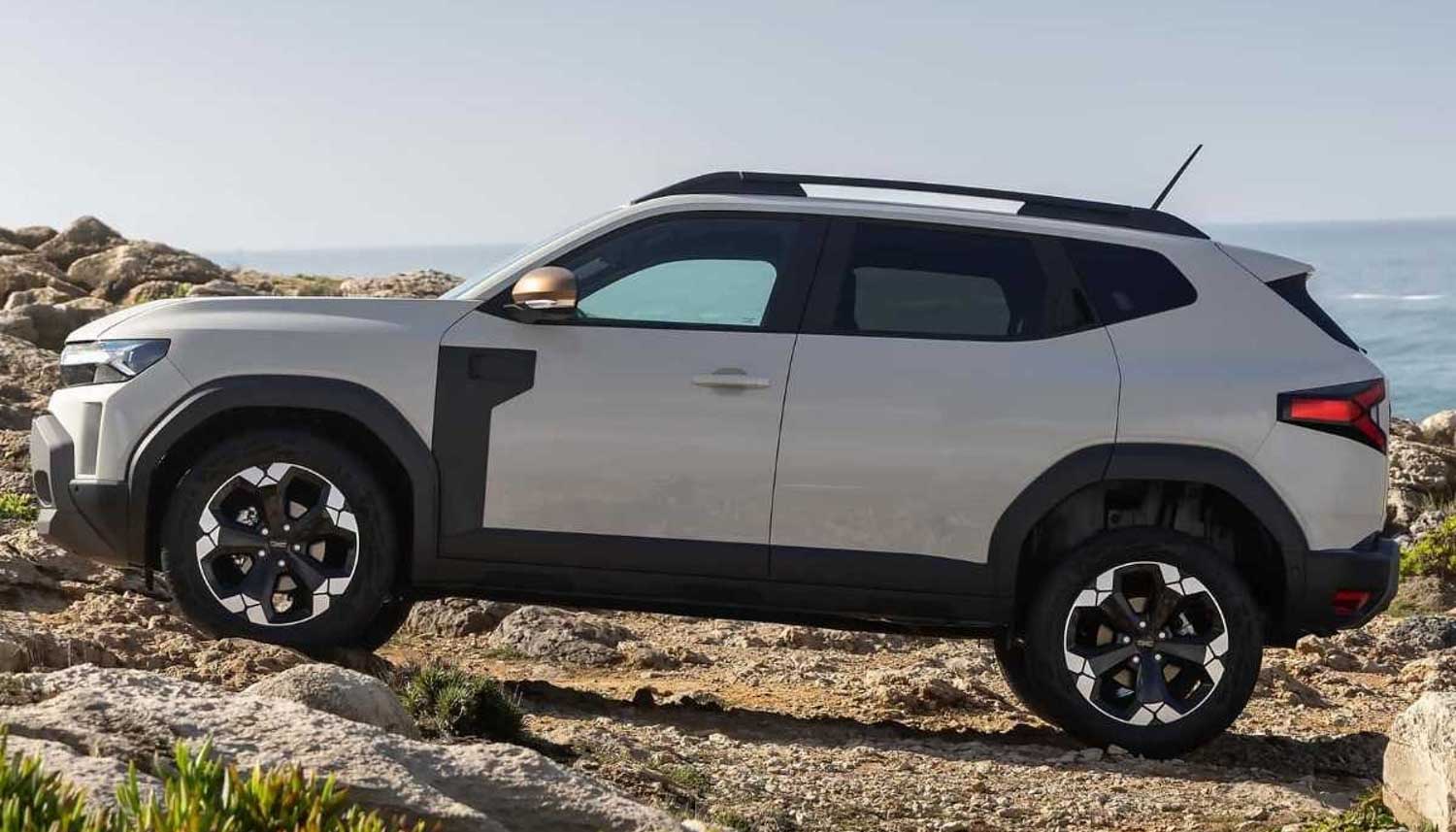
After skipping the second generation, the Renault Duster will make a comeback in the third generation. Also expected to go on sale in the first quarter of 2026, the all-new Renault Duster will set itself apart with a brawny character and sheer ruggedness, attributes that once made it the top pick in its segment.

Dacia Duster

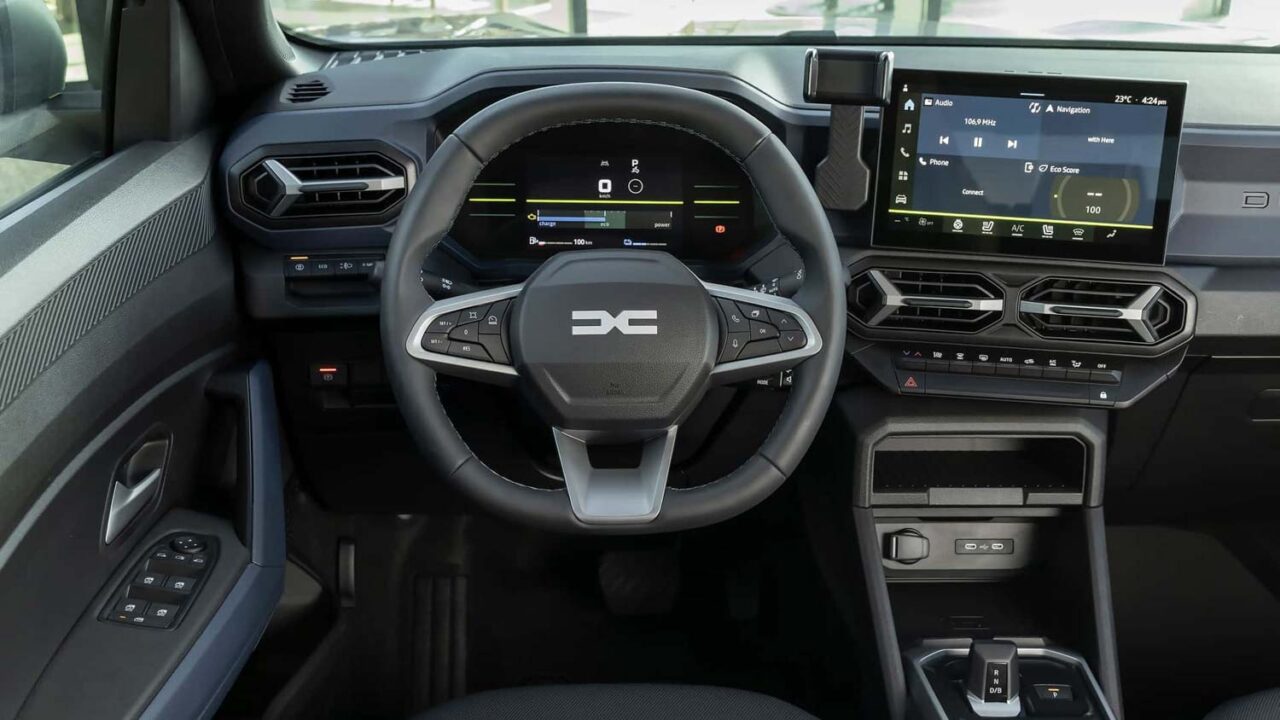
Already on sale internationally, the third-gen Duster is 4.3 metres long, 1.8 metres wide, and 1.7 metres tall and has a 2.7-metre wheelbase. The latest model is far more sophisticated in style, tech, comfort, and safety compared to the first-gen model we’ve known in India. Renault equips it with features like 18-inch alloy wheels, LED headlights, a 7-inch digital instrument cluster, a wireless smartphone charger, a 10.1-inch touchscreen infotainment system with wireless Apple CarPlay and Android Auto, and a wide range of advanced driver assistance systems. That said, it is likely to miss a sunroof, one of the most popular features in this segment, again.

2024-renault-duster-3.jpg

Renault will likely launch the next-gen Duster with 1.0-litre three-cylinder and 1.3-litre four-cylinder turbocharged petrol engines at launch. A 6-speed manual transmission and a CVT are expected with these engines. An AWD system is available internationally, and we expect that to be an option in our market. Within a year of launch, the company will introduce a hybrid variant aimed at customers ready to pay a premium for significantly higher fuel economy and eco-friendliness.

Also Read: Maruti Suzuki To Launch Two New Premium SUVs Soon In India

3. Nissan Midsize SUV

Not long after Renault releases the third-gen Duster in India, Nissan will launch a corporate cousin that serves as the successor to the Terrano. The Japanese automaker has not confirmed the name of this model but has indicated via teasers that unlike the Terrano, it will have a design completely different from its Renault counterpart, inspired by the seventh-gen Nissan Patrol.

New Nissan Midsize SUV
Source: anoop_raveendran

The yet-to-be-named Nissan mid-size SUV should come with the same set of engines and transmissions as the next-gen Renault Duster. Similarly, it may gain a hybrid powertrain at a later stage.

The post Tata, Renault & Nissan To Launch Brand New Midsize SUVs Next Year appeared first on Gaadiwaadi.com - Latest Car & Bike News by Team GaadiWaadi.


from Gaadiwaadi.com – Latest Car & Bike News https://ift.tt/Do2rn18