Maruti Baleno Facelift Full Price List: Rs. 5.99 Lakhs To Rs. 9.99 Lakhs

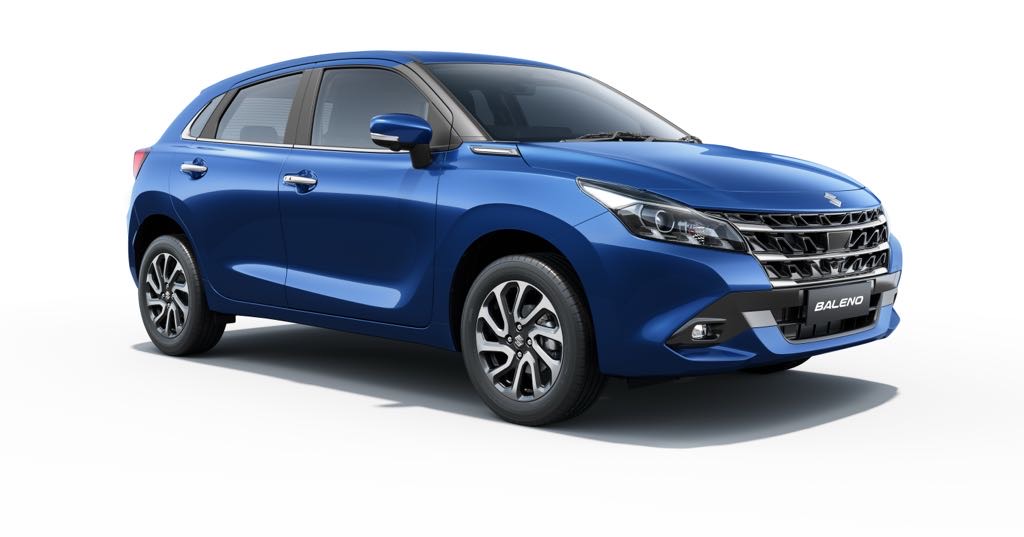
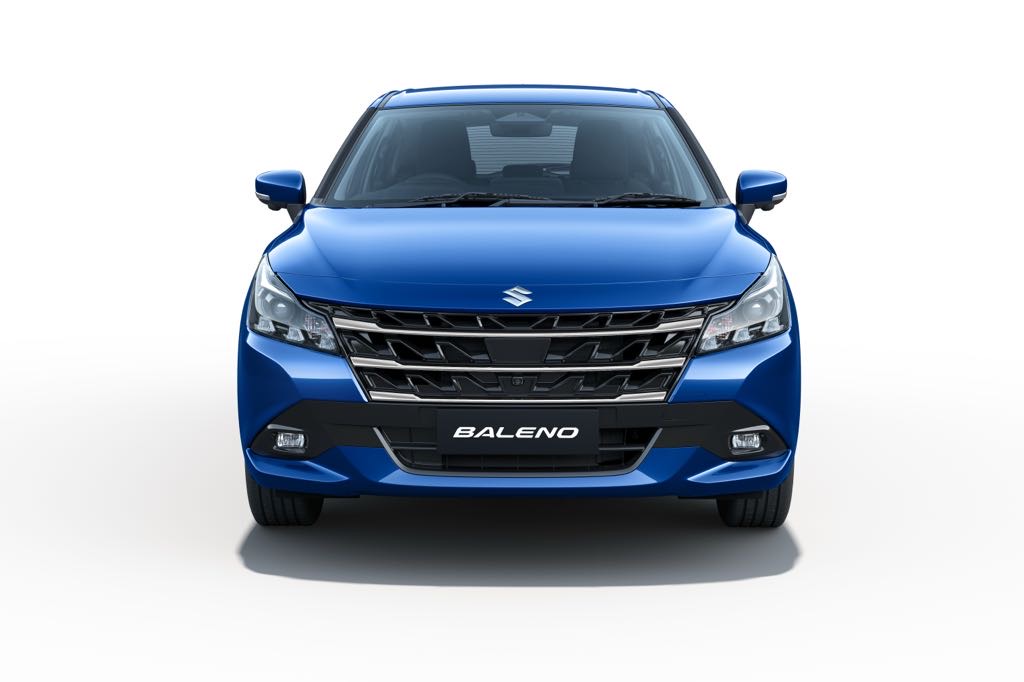
2026 Maruti Baleno Facelift Front

Maruti Suzuki has disclosed the complete variant-wise pricing of the facelifted Baleno, with the premium hatchback now starting at Rs. 5.99 lakhs and going up to Rs. 9.99 lakhs (ex-showroom). The revised prices cover the Sigma, Delta, Zeta, Alpha and Alpha (O) variants.

2026 Maruti Baleno prices

The petrol-manual range starts at Rs. 5.99 lakhs and extends to Rs. 9.50 lakhs for the Alpha (O). Petrol AMT variants are available from Rs. 7.50 lakhs to Rs. 9.99 lakhs. The CNG option is offered on the Delta and Zeta trims, priced at Rs. 7.92 lakhs and Rs. 8.92 lakhs, respectively.

The AMT commands a Rs. 50,000 premium over the equivalent petrol-manual variant. Meanwhile, the CNG versions cost Rs. 92,000 more than their corresponding petrol-manual variants.

The top-spec Alpha (O) is available with both manual and AMT transmissions but there is no CNG version of this trim.

New three-cylinder petrol engine replaces the four-cylinder unit

A significant change with the facelift is the replacement of the previous 1.2-litre K12N four-cylinder petrol engine. The Baleno now uses Maruti Suzuki’s 1.2-litre Z12E three-cylinder petrol engine, which is also used in the Swift and Dzire.

The naturally aspirated engine produces 83 HP and 112 Nm and can be paired with either a 5-speed manual or a 5-speed AMT. Compared with the outgoing engine, peak output is down by 7 HP, while torque has reduced by 1 Nm.

Maruti has, however, focused on improving efficiency with the new engine. The manual version has a claimed fuel economy of 23.80 km/l, while the AMT is rated at 24.77 km/l. These figures represent claimed improvements of 1.45 km/l and 1.83 km/l, respectively, over the corresponding versions of the outgoing model.

CNG Baleno gets higher claimed efficiency

The Z12E engine is also available in a factory-fitted CNG configuration. In this application, it develops 70 HP and 102 Nm and is paired exclusively with a 5-speed manual gearbox.

The CNG-powered Baleno has a claimed efficiency of 33.61 km/kg, which is around 3 km/kg higher than the figure quoted for the previous CNG model.

As with other claimed efficiency figures, actual fuel consumption will depend on factors such as traffic, driving style, road conditions and vehicle load.

Baleno continues to face competition from Altroz, i20 and Glanza

The updated Baleno continues to compete in India’s premium hatchback segment against models such as the Tata Altroz, Hyundai i20 and Toyota Glanza.

The Altroz is priced between Rs. 6 lakhs and Rs. 10.75 lakhs, while the standard Hyundai i20 ranges from Rs. 6 lakhs to Rs. 10.39 lakhs. The i20 N Line sits higher in the price band, at Rs. 9.27 lakhs to Rs. 11.59 lakhs. The Toyota Glanza is priced from Rs. 6.73 lakhs to Rs. 9.99 lakhs.

With its revised powertrain lineup, lower entry price and multiple transmission options, the facelifted Baleno continues to target buyers looking for a relatively efficient petrol hatchback, while the three-cylinder engine represents a trade-off between outright output and claimed fuel economy.

Variant 1.2L 3-Cyl Petrol MT 1.2L 3-Cyl Petrol AMT 1.2L 3-Cyl CNG MT
Sigma Rs 5.99 lakh
Delta Rs 7 lakh Rs 7.50 lakh Rs 7.92 lakh
Zeta Rs 8 lakh Rs 8.50 lakh Rs 8.92 lakh
Alpha Rs 9.10 lakh Rs 9.60 lakh
Alpha (O) Rs 9.50 lakh Rs 9.99 lakh

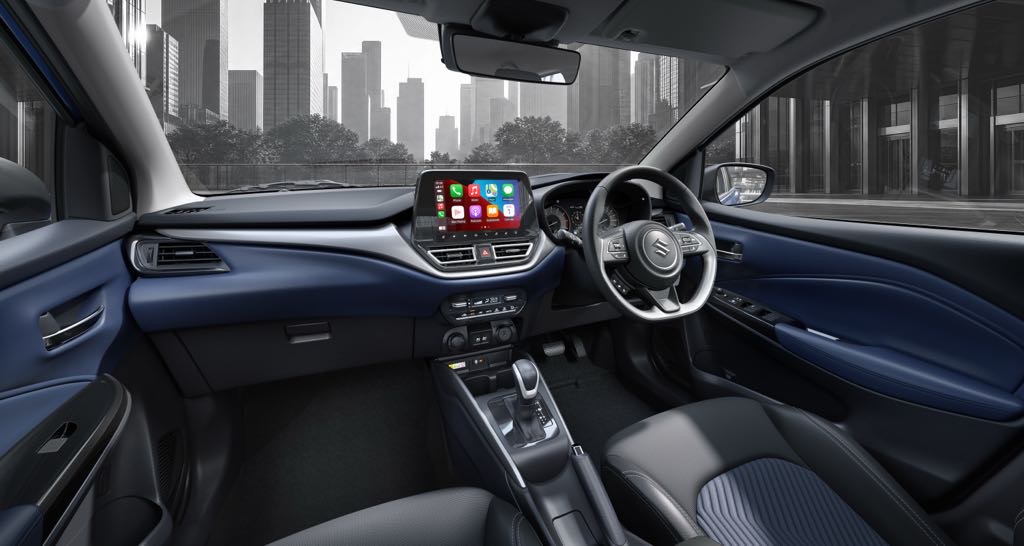
2026 Maruti Baleno Facelift Interior

2026 Maruti Baleno Facelift

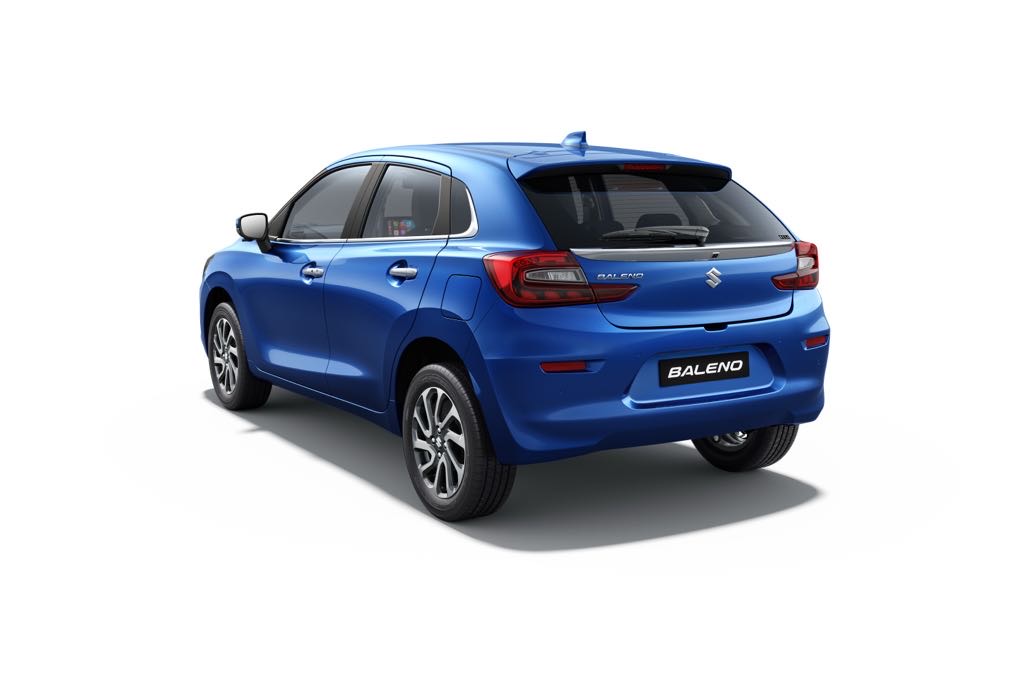
2026 Maruti Baleno Facelift Rear

The post Maruti Baleno Facelift Full Price List: Rs. 5.99 Lakhs To Rs. 9.99 Lakhs appeared first on MotorBeam.


from Car News | MotorBeam - Indian Car Bike News & Reviews https://www.motorbeam.com/2026-maruti-baleno-price-list/

New Toyota Glanza To Be Launched On October 14

GaadiWaadi -

New Toyota Glanza could have a more aggressive exterior, offer more comfort and convenience, and deliver better fuel economy

A little over a month after the Maruti Baleno, its rebadged version from Toyota, the Glanza, will be receiving a facelift. Media reports say Toyota Kirloskar Motor (TKM) plans to launch the new Toyota Glanza on 14 October. The new Toyota Glanza should look almost identical to the new Maruti Baleno. Visual differences on the outside will likely be limited to the brand emblems at the front and rear, the brand and model badges at the rear, and the brand logo on the hub caps. The design revisions should be limited to the front, expected to look much more aggressive than the current model.

TKM will likely use a significantly larger V-shaped radiator grille on the new Toyota Glanza. The Toyota logo could be positioned ahead of the leading edge of the bonnet instead of in the centre of the radiator grille. New fog lamps in a squarish design, a new lower air intake grille designed in a shape similar to the radiator grille for a unified look, and a new bumper with sculpted triangular corners should also be among the changes at the front.

The side profile of the new Toyota Glanza should look identical to the current model, featuring 16-inch alloy wheels, a chrome window surround, and chrome door handle garnish. The rear, too, should mirror the current model, featuring LED tail lights and a chrome tailgate garnish spanning the width between them.

Also Read: New Maruti Suzuki Baleno; Top 5 Things You Should Know

toyota Glanza (2)
Current Toyota Glanza

The interior of the new Toyota Glanza is unlikely to have major visual changes, featuring largely the same modern and practical design as the current model. The lower-central part of the dashboard should be redesigned to make space for switches for a new comfort feature: ventilated front seats. The front part of the centre console will likely make room for a new convenience feature: a cooled wireless smartphone charger. Leatherette upholstery should be another interior upgrade in the facelifted model.

TKM will likely replace the K12N 1.2-litre naturally aspirated four-cylinder engine, which it offers in petrol and petrol-CNG versions, with the Z12E 1.2-litre naturally aspirated three-cylinder engine. The K12N engine produces 89 hp and 113 Nm of torque running on petrol and 76 hp and 98.5 Nm of torque running on CNG.

Also Read: Upcoming 2027 Toyota Innova Hycross Facelift; Key Details We Know So Far

new-maruti-suzuki-baleno-facelift.jpg
New Maruti Baleno

The Z12E engine develops 82 hp and 112.4 Nm of torque running on petrol and 69 hp and 101.8 Nm of torque running on CNG. Like the K12N engine, it should be offered with a choice of 5-speed manual and automated manual transmissions in the petrol version and only the former in the petrol-CNG version.

The new Glanza petrol will likely have a fuel economy rating of 23.80 km/l in the manual transmission variant and 24.77 km/l in the AMT variant, which would represent improvements of 1.45 km/l and 1.83 km/l, respectively. The new Glanza CNG should return 33.61 km/kg, 3 km/kg more than the current model.

The post New Toyota Glanza To Be Launched On October 14 appeared first on Gaadiwaadi.com - Latest Car & Bike News by Team GaadiWaadi.


from Gaadiwaadi.com – Latest Car & Bike News https://ift.tt/fx0j6Yg

New Mahindra Thar To Launch This Month – New Design And Features

GaadiWaadi -

Mahindra Thar 3 Door Facelift

Mahindra’s most off-road-focused SUV to undergo a comprehensive refresh in the coming weeks, bringing multiple design and feature updates

Nearly a year after the first update in October 2025, the second-generation Mahindra Thar is set to receive another round of changes this month. This time around, though, the revisions are likely to be much more comprehensive.

The new Mahindra Thar that will be launched later this month will bring a facelift that makes it immediately distinguishable from the current design that has been present since August 2020. Mahindra intends to give the second-generation Thar a slightly more upscale and trendy appearance with the upcoming refresh.

The new Thar will have subtle design changes such as a revised grille, redesigned bumpers, tweaked headlamps, and a fresh alloy wheel design. A recent test mule sighting showed the upcoming model featuring a five-slot grille, LED headlamps, and new five-double-spoke wheels. Interestingly, earlier prototypes featured a six-double-slot grille similar to the one on the Thar Roxx, but that could’ve been part of the disguise.

Mahindra Thar 3 Door Facelift (1)
Pic Source: thepathfinder722

The interior of the Thar may also get several styling and functional changes. Mahindra could introduce new upholstery and trim, along with a range of new tech, comfort, and convenience features such as a 10.25-inch digital instrument cluster, ventilated front seats, and a wireless smartphone charger. The company may also add passive keyless entry to the list of available features to make ingress and egress more seamless.

The new Thar should be offered with the same three turbocharged engine options as the current model: D117 CRDe 1.5-litre diesel, mHawk 130 CRDe 2.2-litre diesel, and mStallion 150 TGDi 2.0-litre petrol. The 1.5-litre diesel engine produces 87.2 kW (117 hp) and 300 Nm of torque, and it may only be offered with a 6-speed manual transmission like in the current model.

Mahindra Thar (1)
Pic Source: mrd_vlogs

The 2.2-litre diesel engine develops 97 kW (130 hp) and 300 Nm of torque, while the 2.0-litre petrol engine is tuned to deliver 112 kW (150 hp) and 300 Nm of torque. As in the current model, customers should get a choice of 6-speed manual and 6-speed automatic transmissions for these engines. Similarly, an option for a 4WD system may only be offered along with the 2.2-litre diesel and 2.-litre petrol engines.

The post New Mahindra Thar To Launch This Month – New Design And Features appeared first on Gaadiwaadi.com - Latest Car & Bike News by Team GaadiWaadi.


from Gaadiwaadi.com – Latest Car & Bike News https://ift.tt/WUyKMFx

Skoda VW India, JSW Group Sign MoU For Strategic Partnership

2026 Volkswagen Taigun 1

Skoda Auto Volkswagen India has entered into a non-binding Memorandum of Understanding (MoU) with JSW Group to explore a potential strategic partnership in the Indian market. The proposed collaboration would involve joint control and is aimed at expanding the Volkswagen Group’s presence in India through a broader product portfolio, increased localisation and stronger manufacturing and research and development capabilities.

The two companies have not yet disclosed the proposed shareholding structure, investment commitment or other financial details. These aspects are expected to be discussed during the next phase of negotiations, before the companies move towards definitive agreements and seek the necessary regulatory approvals.

According to Skoda Auto Volkswagen India, the partnership is expected to have clearly defined responsibilities and decision-making mechanisms for both parties. The companies will evaluate opportunities across products, manufacturing and R&D, with the aim of improving scale and competitiveness in the Indian market.

EVs and localisation could be key focus areas

Electric vehicles are expected to be an important part of the potential collaboration. The partnership could support investment in EV development and localisation, including products based on Volkswagen Group’s proposed India Main Platform.

The architecture is derived from the China Main Platform and is expected to be adapted for Indian regulations, sourcing requirements and the domestic supplier ecosystem. It could potentially support electric SUVs for the Skoda and Volkswagen brands.

Greater local sourcing could also help reduce manufacturing costs and improve the competitiveness of future EVs in India. However, specific models, timelines and investment plans have not been officially confirmed at this stage.

The companies are also examining opportunities to utilise manufacturing infrastructure within the wider JSW Group. One area reportedly under consideration is greater localisation of Skoda products, including the Kodiaq, at JSW Motors’ facility in Sambhaji Nagar.

The next-generation Kodiaq platform is also understood to be under evaluation for local production. Such a move could eventually result in a locally manufactured three-row SUV, although neither company has confirmed this product plan.

Manufacturing and exports could gain importance

The potential partnership could extend beyond the Indian market, with exports also expected to be part of the discussions. Volkswagen Group’s international distribution network could provide an opportunity to use India as a manufacturing base for vehicles destined for overseas markets.

An eventual India-European Union free trade agreement could further improve the viability of exports to Europe, although this remains dependent on future trade arrangements and the outcome of the partnership discussions.

For Volkswagen Group, India continues to be an important market within its broader internationalisation strategy. Skoda Auto currently leads the Group’s operations in the region and has been tasked with expanding its presence in India and neighbouring markets.

Skoda Auto Volkswagen India sees strong growth

The proposed partnership comes after a strong year for Skoda Auto Volkswagen India. The company recorded around 36 percent growth in domestic volumes in 2025.

Skoda recorded particularly strong growth, with its sales in India doubling during the year. The company also registered its strongest year-on-year growth in India among all the markets in which it operates globally.

The MoU is currently non-binding, meaning the proposed partnership is not yet a finalised joint venture. Further negotiations will determine the investment structure, ownership, product plans and manufacturing arrangements before any definitive agreement is reached.

Skoda Kylaq Sportline Large

Source

The post Skoda VW India, JSW Group Sign MoU For Strategic Partnership appeared first on MotorBeam.


from Car News | MotorBeam - Indian Car Bike News & Reviews https://www.motorbeam.com/skoda-vw-jsw-group-mou-strategic-partnership/

Upcoming Hyundai Compact EV Could Look Like This

GaadiWaadi -

hyundai compact EV rendering

An AI-generated video has offered a possible glimpse of Hyundai’s upcoming electric SUV, but the actual production design remains under wraps

Hyundai’s upcoming compact electric SUV has become the subject of an AI-generated design video, offering an interesting interpretation of what the production model could look like based on the heavily camouflaged prototypes spotted testing in India. The visuals should not be mistaken for leaked production images, but they do give us an idea of how the SUV’s known proportions and design cues could translate once the camouflage comes off.

The model, currently known by its HE1i codename, is expected to make its debut by the end of 2026. Hyundai has confirmed that the new compact EV will be based on the E-GMP (K) platform and will be offered in Standard Range and Long Range versions. It will take on electric SUVs such as the Tata Nexon EV and Mahindra XUV 3XO EV.

So, what does the AI video imagine? The SUV gets a boxy, upright stance, which is broadly in line with what we have seen from the real-world test vehicles. The imagined front features split lighting, with slim LED DRLs positioned higher up and the main headlamps placed lower in the bumper. A black panel visually connects the lighting elements, giving the compact SUV a fairly clean face.

Also Read: Hyundai Sales Analysis August 2026; Creta, Exter, Venue, Aura, i10, i20

hyundai compact EV rendering (2)
Rendering

The side profile shown in the AI render also follows the proportions visible in the spy shots. It gets a flat roofline, roof rails, blacked-out pillars, conventional door handles and chunky wheel arches. The squared-off proportions make the SUV look relatively substantial despite its compact footprint. However, details such as the exact wheel design, surfacing and lighting elements remain purely speculative at this stage.

At the rear, the AI-generated version features square-shaped LED tail-lamps connected visually by a black strip. It is a neat interpretation of the heavily camouflaged test cars, but there is no confirmation that Hyundai’s final design will use this exact lighting arrangement. In fact, even the source of the video describes the design as an expected interpretation rather than an official reveal.

Also Read: Hyundai Plans New EV, Next-Gen Creta & More; 26 New Launches By 2030

hyundai compact EV rendering (1)
Rendering

Interestingly, the AI design doesn’t look completely out of character for Hyundai. The upright proportions and clean surfaces make it look like a smaller, more rugged cousin of the company’s existing SUVs. And that could work in its favour in India, where buyers generally prefer a compact SUV that looks substantial rather than simply being a raised hatchback.

What we do know is that the real HE1i will be a dedicated EV rather than a petrol SUV converted to electric power. Hyundai has confirmed multiple battery options, with the initial vehicles using Svolt cells before the company transitions to locally sourced Exide cells. The SUV is also expected to feature next-generation infotainment and Level 2 driver assistance technology.

new hyundai compact electric SUV spied india
source: carxplain08/Insta

For now, therefore, treat these AI visuals as a design exercise, not a leak. The spy shots tell us the broad shape of Hyundai’s upcoming EV, while the AI video fills in the blanks with its own interpretation. But if the production SUV ends up looking anything close to this, Hyundai could have a rather handsome contender on its hands.

The post Upcoming Hyundai Compact EV Could Look Like This appeared first on Gaadiwaadi.com - Latest Car & Bike News by Team GaadiWaadi.


from Gaadiwaadi.com – Latest Car & Bike News https://ift.tt/qoXwTjZ

Kinetic DX+ 3.1 kWh Launched At Rs. 1.27 Lakh With 132 km Range

GaadiWaadi -

Kinetic-DX-3.1-kWh-1.jpg

The Kinetic DX+ 3.1 kWh gets a larger LFP battery, 3.8 kW motor, regenerative braking, reverse assist and a storage of 37 litres

Kinetic has launched the updated DX+ 3.1 kWh electric scooter at Rs. 1,27,650 (ex-showroom) with the standard DX 3 kWh priced at Rs. 1,18,599 (ex-showroom). The biggest revision is the new 3.1 kWh LFP battery which delivers a certified IDC range of up to 132 km. Kinetic also claims a real-world range of 105 to 110 km between charges.

The 3.1 kWh battery works with a hub mounted BLDC motor developing 3.8 kW of peak power. The scooter offers Range and Power riding modes and K-Coast Tech enables energy regeneration during deceleration. Charging from zero to 80 per cent takes around three hours. The DX+ has also added a retractable charging cable as standard.

The Kinetic DX+ keeps the all-metal body associated with the Kinetic DX nameplate and rides on 12-inch tubeless tyres at both ends. Its ground clearance stands at 165 mm and the wheelbase measures 1,315 mm. The braking duties are dealt by a 220 mm front disc and a 130 mm rear drum and the seat measures 714 mm in length.

Kinetic-DX-3.1-kWh.jpg

Specification Kinetic DX+ 3.1 kWh
Battery 3.1 kWh LFP
IDC Range Up to 132 km
Real-World Range 105 to 110 km
Motor Hub-mounted BLDC
Peak Power 3.8 kW
Charging 0 to 80% in around 3 hours

The equipment list also comprises Park Assist with Reverse, telematics, IP67 water and dust protection and an Easy Flip one-touch pillion footrest. The underseat compartment of 37 litres provides substantial storage space for daily items. The retractable charging cable also helps distinguish the DX+ from the lower DX 3 kWh variant.

The updated range consists of two versions. The DX 3 kWh costs Rs. 1,18,599 (ex-showroom), and the DX+ 3.1 kWh costs Rs. 1,27,650 (ex-showroom). The DX+ is available in Black, Silver, Blue, White and Red whereas the standard DX can be ordered in Black or Silver. Kinetic has also announced festive benefits for both scooters.

The DX 3 kWh gets a Rs. 2,000 benefit and the DX+ can be had with Rs. 3,000. Additional incentives include an Rs. 8,999 extended warranty on the DX+, Rs. 5,000 Amazon cashback and a Rs. 5,000 PM E-Drive benefit.

The post Kinetic DX+ 3.1 kWh Launched At Rs. 1.27 Lakh With 132 km Range appeared first on Gaadiwaadi.com - Latest Car & Bike News by Surendhar M.


from Gaadiwaadi.com – Latest Car & Bike News https://ift.tt/EnPViXQ

Xiaomi SkyNomad N70, N90 SUVs Introduced With Over 1,700 Km Range

GaadiWaadi -

Xiaomi-SkyNomad-.jpg

The Xiaomi SkyNomad range comprises four versions which include five-seat and seven-seat EREVs with up to 505 km EV range and 1,705 km combined range

Xiaomi Auto has introduced the SkyNomad SUV range in China with four extended range electric models based on the Kunlun architecture. Prices start at RMB 209,900 (Rs. 29.66 lakh) for the N70 Pro and rises up to RMB 299,900 (Rs. 42.38 lakh) for the N90 Max Studio. The range also composes the N70 Max and N90 Max with five-seat, seven-seat and mobile studio configurations.

The N70 Pro serves as the entry model with a 52 kWh LFP battery, 351 km of CLTC pure-electric range and up to 1,351 km of combined range. It drives the front wheels and completes the zero to 100 kmph run in 7.9 seconds. The N70 Max adds a twin motor AWD, a 76 kWh ternary lithium battery and 505 km of electric range.

Its combined figure stands at 1,461 km and zero to 100 kmph takes 5.5 seconds. The N70 measures 4,960 mm long and 1,998 mm wide with a 2,950 mm wheelbase. A near-flat floor extends for up to 2.58 metres and the second-row seats can slide by as much as 600 mm. Rear legroom rises to 1,410 mm at the rearmost setting.

Xiaomi-SkyNomad-1.jpg

Model Configuration
SkyNomad N70 Pro 5-seat EREV
SkyNomad N70 Max 5-seat AWD EREV
SkyNomad N90 Max 7-seat AWD EREV
SkyNomad N90 Max Studio Mobile Studio EREV

Luggage capacity stands at 1,203 litres in the standard configuration and expands to 2,425 litres after the second row is folded. The N70 Max adds five-level adjustable air suspension with continuously variable damping to the double-wishbone front and multi-link rear suspension setup. Cabin equipment includes a 16.1-inch central touchscreen, an 8.88-inch instrument display, an optional 21.4-inch rear entertainment screen and a 9-litre refrigerator.

The Max also has Xiaomi’s 25-speaker Astral audio system with 4,890 W of peak output. The N90 Max sits above the N70 as a seven-seat flagship measuring 5,285 mm in length with a 3,080 mm wheelbase. Its 2+2+3 layout offers 950 mm of second-row legroom and 890 mm in the third row. A 76 kWh battery delivers 464 km of pure-electric CLTC range and up to 1,705 km of combined range.

Xiaomi-SkyNomad-Cabin.jpg

The Dual motor AWD variant enables zero to 100 kmph in 5.9 seconds and air suspension with continuously variable damping comes as standard. The N90 Max Studio adds a factory integrated electric lifting roof and converts the cabin into a two-level layout. Roof deployment increases internal height to as much as 2,294 mm and the upper sleeping platform measures up to 1,946 mm long.

The second-row seats can transform into a long bed of 1.87 litres in 30 seconds. Floor heating, a 30-inch projection system, storage cabinets and 220 V power outlets are also included. Xiaomi has equipped the N70 with an NVIDIA Thor-U assisted-driving chip, LiDAR, 4D millimetre wave radar and 25 assistive functions. Nine airbags are standard on the N70 and the N90 Max increases the count to 12. The two five-seat N70 derivatives, the seven-seat N90 Max and the loft-style N90 Max Studio, have prices ranging from RMB 209,900 (Rs. 29.66 lakh) to RMB 299,900 (Rs. 42.38 lakh).

Xiaomi-SkyNomad-1.jpg Xiaomi-SkyNomad-.jpg Xiaomi-SkyNomad-3.jpg Xiaomi-SkyNomad-Cabin.jpg Xiaomi-SkyNomad-Cabin-2.jpg Xiaomi-SkyNomad-Cabin-1.jpg Xiaomi-SkyNomad-Interior.jpg

The post Xiaomi SkyNomad N70, N90 SUVs Introduced With Over 1,700 Km Range appeared first on Gaadiwaadi.com - Latest Car & Bike News by Surendhar M.


from Gaadiwaadi.com – Latest Car & Bike News https://ift.tt/ROD6FbJ