
GaadiWaadi -

Both New-Gen models get a stiffer frame, ride modes, torque bump, TFT, etc but some variants go without hardware their predecessors had
Bajaj Auto’s new generation Pulsar 150 and Pulsar 125 bring a redesigned chassis, more upmarket TFT displays and ride modes for the first time in their respective segments. But the switch from old to new isn’t a straight upgrade across the board. A profound look at the spec sheets shows some new-gen variants go without hardware their predecessors had as standard.
Pulsar 125: Old vs New

The Pulsar 125’s engine grows only marginally on paper, from 124.38cc to 124.58cc, but output climbs from 11.8 PS and 10.8 Nm on the old bike to 12.1 PS and 11.4 Nm on the new one. Front disc size grows too, from 240 mm to 260 mm, and the twin shock rear end of the old bike gives way to a monoshock with a longer 110 mm stroke – up from 102 mm and is one of the highlighting upgrades.

Tyre sizes stay identical across generations at 80/100-17 front and 100/90-17 rear. The horn gets an update too: the old Pulsar 125 made do with a single horn regardless of variant while every new-gen trim gets twin horns. The old base Neon variant ran bulb indicators while the standard single/split-seat variant already had LED units. On the new bike, the entry LCD variant reverts to bulb blinkers and only the TFT-equipped Mid and Top trims get LED.
Also Read: First-Ever Bajaj Adventure Bike To Launch By Christmas This Year
| Spec | Old | New |
|---|---|---|
| Engine | 124.38 cc | 124.58 cc |
| Power | 11.8 PS @ 8,500 rpm | 12.1 PS @ 8,500 rpm |
| Torque | 10.8 Nm @ 6,500 rpm | 11.4 Nm @ 6,500 rpm |
| Front Brake | 240 mm disc | 260 mm disc |
| Rear Brake | 130 mm drum | 130 mm drum |
| Front Suspension | Telescopic, 30 mm dia, 135 mm stroke | Telescopic, 31 mm dia, 125 mm stroke |
| Rear Suspension | Twin shock, 102 mm stroke | Monoshock, 110 mm stroke |
| Headlamp | LED with pilot lamp | LED with pilot lamp |
| Tail Lamp | LED | LED |
| Speedometer | Analog + digital (Neon) / 4.8-inch fully digital, Bluetooth (higher trim) | 5-inch coloured LCD, Bluetooth + turn-by-turn (Base) / 5-inch TFT, Bluetooth (Mid) / 5-inch TFT with Wi-Fi, Google Maps, mirroring (Top) |
| Blinkers | Bulb (Neon) / LED (higher trim) | Bulb (Base) / LED (Mid, Top) |
| Starting System | Self-start + kick | Self-start + kick (Base) / ISG + kick (Mid, Top) |
| Ride Modes | No | No (Base) / Yes (Mid, Top) |
| USB | Type-A | Type-C, optional on Base, standard from Mid |
| Belly Pan | No (Neon) / Yes (higher trim) | No (Base) / Yes (Mid, Top) |
| Hazard Light | No | No (Base) / Yes (Mid, Top) |
| Horn | Single | Double |
| Price (Ex-showroom, Delhi) | Rs. 81,556 (Neon) / Rs. 92,341–94,518 (higher trim) | Rs. 92,900–1,04,318 |

Pulsar 150: Old vs New
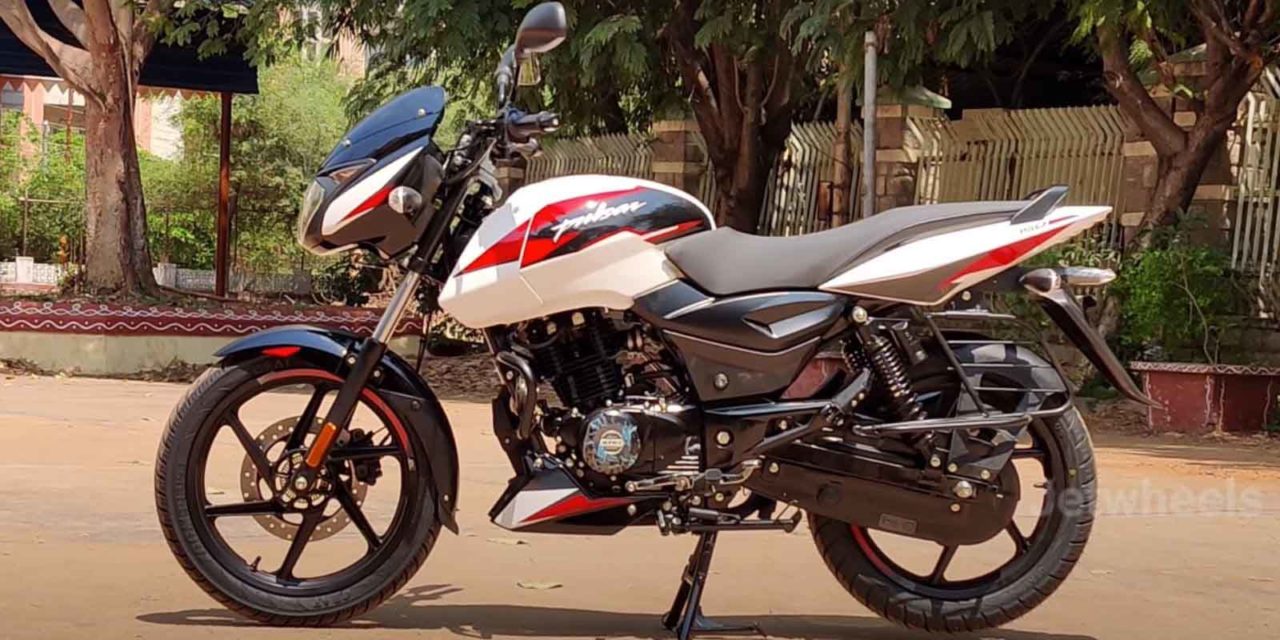
The Pulsar 150’s displacement is unchanged at 149.5cc and peak power holds at 14 PS on both the outgoing and new-gen engines. What’s changed is where that power arrives: the old engine made its 14 PS at 8,500 rpm, the new one gets there 500 rpm earlier at 8,000 rpm and torque climbs from 13.25 Nm to 14.1 Nm at the same 6,500 rpm mark.
The power-to-weight gain Bajaj talked up at the launch, then, looks to come from a lighter chassis not extra power on paper. The bigger surprise sits with the outgoing bike’s split-seat variant which turns out to have been the more hardware-based of the two old trims. It ran a 90/90-17 front and 120/80-17 rear tyre, a 280 mm front disc, and a 37 mm front fork, all wider or bigger than anything on the new range.
Also Read: Royal Enfield To Introduce 3 New Adventure Bikes Soon In India

| Spec | Old | New |
|---|---|---|
| Engine | 149.5 cc | 149.5 cc |
| Power | 14 PS @ 8,500 rpm | 14 PS @ 8,000 rpm |
| Torque | 13.25 Nm @ 6,500 rpm | 14.1 Nm @ 6,500 rpm |
| Front Tyre | 80/100-17 TL (single seat) / 90/90-17 TL (split seat) | 80/100-17 TL |
| Rear Tyre | 100/90-17 TL (single seat) / 120/80-17 TL (split seat) | 100/90-17 TL |
| Front Brake | 260 mm disc (single seat) / 280 mm disc (split seat) | 260 mm disc |
| Rear Brake | 130 mm drum (single seat) / 230 mm disc (split seat) | 130 mm drum (SD) / 230 mm disc (TD) |
| ABS | Single-channel | Single-channel |
| Front Suspension | Telescopic, 31 mm dia, 135 mm stroke (single seat) / 37 mm dia, 130 mm stroke (split seat) | Telescopic, 33 mm dia, 125 mm stroke |
| Rear Suspension | Twin shock, 102 mm stroke | Monoshock, 110 mm stroke |
| Headlamp | Class B LED with pilot lamp | Class B LED with pilot lamp |
| Tail Lamp | LED | LED |
| Speedometer | Analog + digital (single seat) / 4.8-inch fully digital, Bluetooth (split seat) | 5-inch coloured LCD, Bluetooth + turn-by-turn (SD) / 5-inch TFT, Bluetooth (TD) / 5-inch TFT with Wi-Fi, Google Maps, mirroring (TD split seat) |
| Blinkers | LED | Bulb (SD) / LED (TD) |
| Starting System | Self-start + kick | Self-start + kick (SD) / ISG + kick (TD) |
| Ride Modes | No | Yes, both variants |
| USB | Type-A | Type-C |
| Belly Pan | Yes | No (SD) / Yes (TD) |
| Hazard Light | No | No (SD) / Yes (TD) |
| Horn | Double | Double |
| Price (Ex-showroom, Delhi) | Rs. 1,11,197 (single seat) / Rs. 1,17,906 (split seat) | Rs. 1,15,233 (SD) / Rs. 1,22,184–1,23,187 (TD) |
It standardises on an 80/100-17 front, 100/90-17 rear, a 260 mm front disc, and a 33 mm fork across SD and TD. The monoshock rear end in place of the old bike’s twin shocks and the 110mm stroke up from 102 mm, are good upgrades, but the tyre and front brake sizes on the old split-seat variant were not matched by the new range.

The base SD variant of the new bike also goes without a few things the old bike had on both its trims. Blinkers switch from LED, standard on every old Pulsar 150, to bulb on the SD, with LED returning only on the TD. The belly pan, standard across the old lineup, disappears on the SD too and comes back only on the TD. ABS stays single-channel throughout, on both generations.
USB moves from Type-A to Type-C across the new range with no optional caveat this time and the horn stays a double unit on every variant, old and new. The new generations bring a stiffer diamond-type frame, monoshock rear suspension, and ride modes to every variant and pushes torque and front braking hardware up at the base of the range.

But the entry SD and Base trims pick up a few cuts too – in blinkers and belly pan on the 150’s SD – and blinkers and standard USB-C on the 125’s Base while the old Pulsar 150’s split-seat variant loses out on tyre width, front disc size, and fork diameter it once had over the new-gen range.
The post New Bajaj Pulsar 150/125 vs Old Pulsar 150/125 – Key Changes Explained appeared first on Gaadiwaadi.com - Latest Car & Bike News by Surendhar M.
from Gaadiwaadi.com – Latest Car & Bike News https://ift.tt/kKf8cs7

No comments:
Post a Comment